Online Baccarat in New Zealand: 2026 Guide
 Available in US
Payouts and house edges provide a basis for comparison, while game formats, free play and licensing context add important detail.

Table of Contents
- How to Compare Baccarat Casinos Without a Borrowed “Best” List
- What Real-Money Baccarat Bets Actually Pay
- New Zealand’s Online Casino Licensing Transition in 2026
- How a Baccarat Hand Is Decided
- Mini Baccarat, Speed Baccarat and Optional Side Bets
- Free Baccarat Play: What You Can Check Before Depositing
- Free Baccarat Online Without a Download
- Crypto Baccarat: What the Verified Information Does—and Doesn’t—Establish
- Live Dealer Baccarat and Automated Games
- Can You Cheat or Improve Your Chances at Baccarat?
How to Compare Baccarat Casinos Without a Borrowed “Best” List
A label such as “best online baccarat” tells you little unless you can see the terms behind it. For a useful comparison, look at the house edge and the payout attached to each main bet. These figures describe different parts of the deal: the payout states what a winning bet returns, while the house edge estimates the casino’s mathematical advantage over repeated play.
The house edge is not a forecast of what will happen in your next session. It is a long-run measure calculated from the game’s probabilities and its stated terms. A result can go either way in the short term; the edge does not determine which hand wins or guarantee a particular outcome. It does, however, let you compare the expected cost of different betting options when the underlying conditions match.
| Main bet | Stated payout | House edge |
|---|---|---|
| Player | 1:1 | 1.24% |
| Banker | 0.95:1 after 5% commission | 1.06% |
| Tie | 8:1 | 14.36% |
If you’re looking at online baccarat in New Zealand in 2026, this list gives you a concise starting point for reviewing the operators. Check the details that matter to you before choosing where to play.
Payout speed: 1-3 business days Wintino lists a payout speed of 1–3 business days, a useful detail to consider when reviewing its payment terms.
License: Curaçao Gaming Authority, licence no. OGL/2024/165/0185 BitStarz lists a Curaçao Gaming Authority licence, number OGL/2024/165/0185.
License: 07017519840 · Payout speed: 1-3 business days Zotabet lists licence number 07017519840 and a payout speed of 1–3 business days.
License: Tobique Gaming Commission, licence no. 0000091 7Bit Casino lists a Tobique Gaming Commission licence, number 0000091.
License: Tobique Gaming Commission, licence no. 0000002 Ricky Casino lists a Tobique Gaming Commission licence, number 0000002.
License: Malta Gaming Authority, licence no. MGA/B2C/370/2017 Play Grand lists a Malta Gaming Authority licence, number MGA/B2C/370/2017.
License: Tobique Gaming Commission, licence no. 0000064 Neospin lists a Tobique Gaming Commission licence, number 0000064.
License: Malta Gaming Authority, licence no. MGA/B2C/394/2017 N1 Casino lists a Malta Gaming Authority licence, number MGA/B2C/394/2017.
Payout speed: 1-3 business days Lamabet lists a payout speed of 1–3 business days, which you can take into account when reviewing its payment terms.
The figures shown are for an eight-deck game, with the Banker figure reflecting a 5% commission. The commission matters because the headline payout on Banker is not the whole calculation: the edge depends on the payout terms taken together. When you compare tables, check whether the stated commission and the conditions behind the quoted edge match. A percentage without its assumptions can look more definitive than it is.
On these terms, Banker has the lowest house edge of the three options, followed by Player. Tie has a substantially higher edge, despite its larger quoted payout. That contrast is useful: a larger return when a bet wins does not, by itself, mean a better-value bet. The chance of winning is part of the calculation too, which is why payout figures and house-edge figures should be read together rather than treated as interchangeable.
This is a comparison of the betting terms, not a promise that one option will perform well for you. The edge does not say how quickly a result will emerge, how a particular run of hands will go, or what you will finish with. Nor does the lowest figure erase the casino’s advantage. It means that, under the stated assumptions, the mathematical cost is lower than for the other listed options over the long run.
When assessing an online casino with baccarat, look for terms that are specific enough to check. A page that gives only an attractive payout, but no house edge or commission detail, leaves out information needed to compare the table fairly. Conversely, a low edge should not be read in isolation if the page does not make clear which bet it concerns or what payout terms produce it. The useful question is not whether a table is labelled “best”, but whether its terms are stated clearly and consistently.

The same discipline applies to lists describing the best baccarat casinos. Rankings can draw attention to a selection, but the label itself does not explain the mathematics of the game. A comparison grounded in the stated edge and payout terms gives you a clearer basis for judging what is being offered, without treating a promotional description as evidence. The operator details can be considered separately; the figures above explain the game terms, not the overall quality of any casino.
If you are considering live casino baccarat, the word “live” does not change what the house-edge figures mean. The relevant comparison here remains the stated betting terms. A table’s presentation may be a separate consideration, but it should not be confused with a different mathematical advantage unless the terms themselves differ. Compare like with like: the same bet, the same commission conditions and the same basis for the quoted edge.
For a quick reading, start with the edge, then check the payout and any commission that applies. Treat a larger payout as one part of the calculation, not as a verdict. And regard a claim of “best” as a conclusion that needs support, not as a substitute for the terms themselves.
What Real-Money Baccarat Bets Actually Pay
In a standard Punto Banco game, you choose between three wagers before the cards are dealt: Player, Banker or Tie. The names refer to the two hands, not to people at the table. A Player bet backs the Player hand to finish closer to nine; a Banker bet backs the Banker hand to do so; a Tie bet backs the hands to finish level. The payout depends on which of those outcomes your wager covers.
Backs the Player hand to finish closer to nine. Pays 1:1.
Backs the Banker hand to finish closer to nine. Pays 0.95:1 after a 5% commission.
Backs the hands to finish level. Pays 8:1.
The figures shown for a wager describe its payout if it wins. A Player bet pays 1:1: the stated payout is equal to the amount wagered. If you stake $10, for instance, the winning payout is $10, in addition to the return of your stake under the usual meaning of a quoted payout. The $10 example is only arithmetic; it does not indicate a minimum stake or a recommended amount. If the Player hand does not win, the Player wager loses.
A Banker bet has a different quoted rate. Its payout is 0.95:1 after a 5% commission. In practical terms, the payout is slightly less than the amount wagered: on a $10 winning Banker bet, the quoted payout after commission would be $9.50, with the stake returned. The difference is the commission applied to the Banker win. The wager still backs the Banker hand; the deduction changes what a winning bet pays, not what the bet means.
This is why comparing the two winning returns by looking only at the labels can mislead. Player and Banker are separate choices, and their payout terms are not identical. The Banker rate accounts for commission, so a winning Banker wager does not pay the same as an equal Player wager. Check whether the table states the Banker payout after commission, rather than treating the two sides as interchangeable. A displayed rate is useful only when you know whether the commission has already been taken into account.

The Tie option works differently: it wins only when the result is a tie, and its stated payout is 8:1. That is a larger quoted return than either of the other two bets, but it applies to a narrower outcome. If the result is not a tie, the Tie wager loses. The higher number beside a bet does not, by itself, mean that it is the better choice; it tells you what that wager pays when its condition is met.
For a simple comparison of stated payouts, the three terms are therefore 1:1 for Player, 0.95:1 for Banker after 5% commission, and 8:1 for Tie. Keep the condition attached to each figure: Player and Banker back one hand over the other, while Tie backs an equal result. A payout ratio is not a promise that a particular outcome will occur, nor does it describe how often that wager wins. It is the amount attached to a successful wager.
When you look at an online baccarat table for real-money play, read the bet labels and payout information together before staking anything. This matters especially for Banker, where the commission explains why the quoted return is below 1:1, and for Tie, where the larger payout applies only to a tie. The same three choices are the standard options in Punto Banco whether the table is shown through an online casino or encountered in another setting. A live presentation does not change what the labels mean.
Example: 1:1 × $10 = $10 payout (plus the return of the $10 stake).
There is no payout trick that turns one of these choices into a guaranteed return. Selecting Player, Banker or Tie determines which result your wager needs; the posted terms determine what a successful wager pays. Treat the return as a condition attached to the bet, not as a forecast. If you are checking a real-money baccarat table, the useful details are the selected outcome, the quoted payout and, for Banker, whether the commission is already included. Those terms tell you what happens to that particular wager when it wins.
New Zealand’s Online Casino Licensing Transition in 2026
The Online Casino Gambling Act 2026 created New Zealand’s domestic licensing system for online casino gambling. It took effect on 1 May 2026, but the change is not an instant switch from offshore services to a fully licensed market. The Act sets out a transition, with different conditions before and after 1 December.
For Kiwi considering online baccarat during 2026, the central point is that no operator holds a New Zealand Department of Internal Affairs (DIA) licence that year. A website serving New Zealand customers should not therefore be described as locally licensed simply because it is available to them or has operated here for some time. Availability and domestic licensing are separate matters.
What applies before 1 December
Operators that were already serving New Zealand before the Act came into force may continue operating until 1 December 2026, subject to the Act’s transitional provisions. That permission is time-limited; it is not a New Zealand licence, nor does it establish that an operator will qualify for one.

The transitional period gives the new system time to take effect while the previous market arrangements are replaced. Before the Act, online casino gambling supplied from outside the country was not licensed or supervised by a New Zealand regulator. A customer using an offshore website during that period had no domestic government recourse. The new law changes the regulatory framework, but the transition means that the licensing position remains unsettled through much of 2026.
This distinction matters when assessing claims about a baccarat casino online. An operator’s history of serving New Zealand does not itself show that it has been approved by the DIA. Nor should the absence of a local licence in 2026 be mistaken for proof that every operator is in the same position under the transition: the Act’s temporary provisions depend on when the operator began serving the market and, later, on its licensing application status.
The change on 1 December
From 1 December 2026, the temporary arrangement becomes narrower. Operators that have applied for a licence and whose applications are under consideration may continue under a temporary exemption. This is a bridge for applications still being assessed, not a permanent substitute for a licence. Operators that have not applied cannot rely on that exemption to continue serving New Zealand under the stated transition.
The intended market position is that licensed operators may serve New Zealand players. The temporary exemption is a limited transitional exception for qualifying applicants awaiting consideration; it does not mean that those applicants already hold a licence. If an operator says it can continue after 1 December, the relevant distinction is whether it is licensed or falls within that specific temporary arrangement.
The full licensed regime is not expected to be operational until 2027, so 1 December should not be read as the date on which every application will necessarily have been decided. The Act provides for a transition between the earlier market and the licensing system, rather than treating the start of licensing as an instantaneous event.
No Local Licences
No operator holds a New Zealand Department of Internal Affairs (DIA) licence in 2026.
For anyone checking an online casino in New Zealand in 2026, the dates and the operator’s status matter more than a general claim that it is “available to New Zealand players.” Before December, the key transitional condition is whether it was already serving the country before the Act took effect. From December, continued operation depends on holding a licence or qualifying for the temporary exemption while an application is under consideration. No operator has a New Zealand DIA licence in 2026.
How a Baccarat Hand Is Decided
In the common Punto Banco form of baccarat, two hands are dealt: Player and Banker. The names identify the hands; they do not mean that you control the cards or decide how either hand develops. Each hand’s value is worked out from its cards, and the dealing follows fixed rules.
The card values are straightforward. An ace is worth one, cards from two through nine count at face value, and tens and picture cards—jacks, queens and kings—count as zero. Suits do not change a card’s value or affect the result.
Reading the total
Add the values of the cards in a hand, then use only the final digit of that sum as the hand’s baccarat value. If the sum has more than one digit, the digits before the last one are ignored. A zero-valued card contributes nothing to the sum.

That last-digit rule is central to understanding baccarat: the hand is not judged by its full arithmetic total. Instead, its recorded value runs from zero to nine. When the cards are revealed, compare the resulting values of Player and Banker. The hand closer to nine is ahead; matching values mean the hands are tied.
A baccarat table may use several decks; the traditional and most common Punto Banco format uses six to eight. The number of decks does not alter the basic method for valuing cards or reading a hand total.
When another card is dealt
The initial deal gives each hand two cards. Whether either hand receives a third card is governed by the game’s fixed drawing rules, not by a player’s choice. You do not decide to draw because a hand looks weak, nor can you stand because it seems strong. The dealing procedure determines what happens next.
There is one important stopping point to recognise: if a hand’s value is eight or nine after its first two cards, no further cards are dealt. These totals are often called natural results. For a newcomer, the practical point is simple: once either hand has reached one of them on the opening deal, the hand is complete.
For other opening values, the third-card procedure still follows the preset rules. The presence of a third card is not itself a signal that a hand has improved; its value must be included and the final digit recalculated. Because the rules govern the deal, you can follow the sequence without trying to make strategic card-drawing decisions.
Deciding a Hand
Assign values: Ace is one, 2–9 are face value, and 10s/face cards are zero.
Add the card values and keep only the final digit of the total.
Compare the final digit of the Player and Banker hands; the value closer to nine wins.
When learning how to play baccarat online, focus first on three things: identify each card’s value, add the cards in each hand, and keep only the last digit of each total. Then note whether the opening deal has already produced an eight or nine. This is enough to follow how a hand is decided, without confusing the mechanics of dealing with the separate question of which outcome a wager covers.
The same arithmetic applies whether you are watching a physical-card presentation or a computer-generated game. The visible cards may be presented differently, but the value of an ace, a face card or a hand total does not change. Once the calculation is familiar, the result can be read from the two final hand values rather than guessed from the number or appearance of the cards.
Mini Baccarat, Speed Baccarat and Optional Side Bets
Baccarat tables can differ in pace, layout and optional wagers, even when they share the same broad game format. The labels “mini” and “speed” describe different features: mini baccarat changes the table setup, while Speed Baccarat changes how quickly hands are dealt. Neither label, by itself, tells you what a particular wager pays.
Mini baccarat is a lower-stakes version played at a smaller table. Players do not handle the cards, and the dealer always acts as banker. That makes the format distinct from a larger table where players may have a more direct role in handling the cards. The smaller layout is a practical difference; it does not mean you should assume the game has different betting terms. Check the table information for those separately.
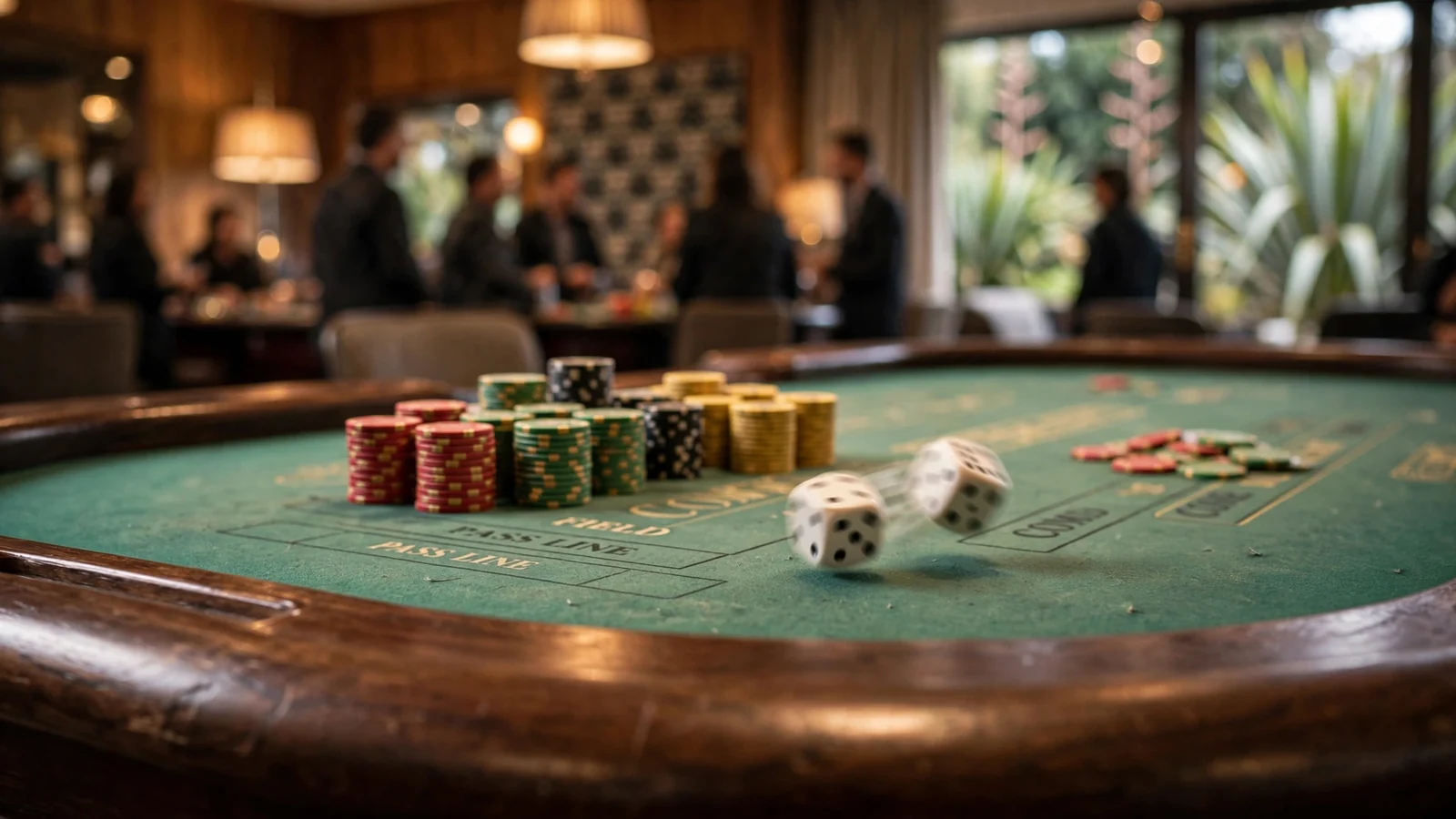
Speed Baccarat is about pace. A specialist review describes it as dealing roughly twice as many hands per hour as standard baccarat, which can increase the cost of playing over an hour. The arithmetic is straightforward: when more hands are dealt, the same stake can be wagered more often. The faster rhythm does not make each hand cheaper, and it does not give you more control over the result. If you prefer time to consider each decision, a faster table may simply feel less comfortable.
The pace can matter even if you do not change your stake. More frequent hands mean fewer pauses between opportunities to wager, so it is worth deciding in advance how long you intend to play. That is a practical consideration, not a claim that a speed format changes the underlying baccarat outcome or its stated terms.
Some online casinos also offer side bets, including pair bets on either hand, according to a specialist review. A side bet is an optional wager offered alongside the main baccarat choices. Its availability should not be assumed at every table, and the wording alone does not tell you the conditions or payout. Read the displayed rules before selecting one; if the terms are not clear, you can stick to the main table options instead.
Side bets may look like a small addition to a familiar game, but they are separate wagers. Do not treat the main table’s payout information as if it automatically describes a pair bet. Check what outcome the side bet covers and what its own terms say. If those details are not displayed clearly, there is no reason to guess.
When comparing a mini table with a speed table, focus on the difference each label actually signals. Mini points to a smaller table, lower stakes and a dealer who handles the banker role; speed points to a quicker sequence of hands. Side bets are optional and may be offered on some tables, not all. These distinctions can help you choose a format that suits your pace and preferences without confusing table design, dealing speed and wager terms.
- Focus on table design when choosing Mini Baccarat
- Consider your time preferences for Speed Baccarat
- Read displayed rules before selecting side bets
- Assume Mini Baccarat has different betting terms
- Expect a faster rhythm to reduce the cost of play
- Treat main table payouts as applying to side bets
Free Baccarat Play: What You Can Check Before Depositing
A free-play option can be useful for getting comfortable with a baccarat interface, but it should not be assumed to exist at every online casino. Before depositing, check whether the particular game offers a practice mode and whether you can open it without creating a funded balance. If the option is not clearly described, do not treat a promotional label or a game preview as proof that you can play without wagering money.
Read the wording around any free mode carefully. Find out whether it is genuinely for practice, whether it uses simulated credits, and whether those credits can be exchanged for cash or used to qualify for an offer. These details matter because “free” can describe different things: an unfunded practice session is not the same as a bonus with conditions attached. If the explanation is unclear, pause rather than guessing.
Also check what happens when you leave the practice session. A free-play screen may be separate from the real-money game, or it may sit alongside it in the same interface. Make sure you can tell which mode is active before making any selection. If the page switches modes or displays a balance that is hard to interpret, do not proceed until the distinction is clear.
You can assess the game’s presentation without treating a practice session as evidence about real-money outcomes. A free mode may let you inspect the layout, menus and pace of the interface. It cannot establish how a real-money session will feel to you, and it does not make any future result predictable. A label such as “best” is not a substitute for checking what the game actually lets you do.

Device access is one practical point you can verify: online baccarat can be played on a PC, tablet or smartphone. If you expect to switch between devices, check that the game is readable and usable on the one you plan to use. The mere fact that baccarat is available across these device types does not confirm that a particular free-play option works on each of them.
Before putting money into an account, look for a clear description of the game mode, any conditions attached to free credits, and an obvious way to distinguish practice from real-money play. If you cannot find those details, contact the online casino for clarification or leave the option alone. A cautious check is more useful than assuming that “free” means the same thing everywhere.
Free play can help you explore an interface if it is offered, but it does not remove the need to understand the terms of any real-money activity. Keep the two decisions separate: first establish whether a no-cost practice mode is available and what it entails; only then decide whether you want to consider depositing.
Free Baccarat Online Without a Download
Wanting to play baccarat without installing software is a practical preference, but it does not establish that a particular online casino offers browser-based access or a free-play mode. Those are separate features. A game might be accessible on your device while still requiring an app, and a game available without a download might still require a deposit or real-money play.
Device compatibility, installation requirements, and free-play availability are three separate features that should be confirmed independently.
Online baccarat can be played on PCs, tablets and smartphones. That tells you which broad device types can be used; it does not tell you whether a game opens in a browser, whether an app is required, or whether practice play is available. Check the game’s own access information before relying on a no-download option. If the details are unclear, do not treat the absence of an installation prompt as proof that the game is free.
The same distinction matters when you see “real baccarat” used to describe an online game. It may refer to baccarat offered for real-money play, rather than a free simulation. The wording alone does not confirm which mode is available. Look for a clear label distinguishing practice play from real-money play, and check what the site says happens when you select the game. Do not assume that a free mode is available simply because the game is listed.
Before opening a game, check the practical details that affect your choice: whether access is through a browser or an app, whether the game is labelled as free or real-money, and whether the site explains what selecting it will do. A clear description should let you tell these points apart without relying on promotional wording. If the information is absent, the safe conclusion is that you have not established the access method or the play mode.
A no-download preference does not remove the need to understand the type of play. Free play, where offered, and wagering real money are not interchangeable. Nor does a device being supported mean that every baccarat table, or every way of accessing it, will work on that device. Check the specific game and access instructions rather than assuming that a general claim about mobile or computer compatibility answers those questions.

The useful distinction is simple: device compatibility, installation requirements and free-play availability are different things. Confirm each separately before proceeding. That avoids mistaking a game’s presence online for evidence that it can be played for free, without a download, or in both ways.
Crypto Baccarat: What the Verified Information Does—and Doesn’t—Establish
Cryptocurrency and baccarat describe different parts of an online casino. Baccarat is the game; crypto refers to a possible way of moving funds. Seeing the two discussed together does not, by itself, establish that a particular online casino accepts digital currency or that you can use it to play.
That distinction matters if you are considering online baccarat in New Zealand. The game’s rules and stated returns do not tell you what payment methods an operator supports. Nor do they establish which currencies it accepts, how deposits or withdrawals are handled, whether conversion costs apply, or what checks may be required. Those are separate terms, and you should not infer them from a game page or from the word “crypto” in a general description.
The same applies to the phrase “crypto baccarat”. It may refer to baccarat offered by a casino that uses cryptocurrency, but the phrase alone does not confirm that arrangement. It says nothing definite about the operator, the payment process or the protections attached to a transaction. Treat each of those as a separate question, rather than as a feature guaranteed by the label.
Attention: The term “crypto baccarat” does not confirm that a casino accepts digital currency or provide details on payment protections.
A useful way to assess a claim is to look for clear, specific payment terms from the operator: whether cryptocurrency is accepted, which assets are supported, how funds are credited and withdrawn, and what conditions apply. If those details are unclear, the label does not fill in the gaps. Avoid treating a promotional description or a game listing as evidence of payment support.
Payment questions also do not change how baccarat works. The game’s card values, hand decisions and betting options are separate from the method used to fund an account. And crypto acceptance, even if stated by an operator, would not establish its status under New Zealand’s online casino rules. The licensing transition is a distinct issue; a payment method is not a substitute for understanding which legal framework applies.
So the practical distinction is simple: a baccarat listing tells you about a game, while a payment policy tells you whether cryptocurrency can be used and on what terms. Keep those claims separate, and do not assume one from the other.
Live Dealer Baccarat and Automated Games
Live dealer baccarat and automated baccarat differ in how the cards are presented. In a live game, a real dealer handles physical cards, with the table streamed to you by video. In an automated version, a random number generator, or RNG, determines the result instead. The distinction is about the dealing process, not a different set of odds: the house edge is identical for live dealer and automated baccarat.
A specialist review identifies Evolution Gaming, Pragmatic Play and Playtech as providers of live dealer baccarat. That is a report of named providers, not a guarantee that their games will be available at every online casino or remain available over time.
The video stream can show the dealer and cards, while an RNG game presents the result through software. Neither format gives you control over how the cards are dealt. If you are comparing the two, consider which presentation you prefer; the live stream does not, by itself, improve the mathematical return.
The label “live” describes the use of a dealer and physical cards on camera. It should not be read as a claim that the game has different odds from its automated counterpart. For the house edge, the relevant distinction is not whether you see a dealer, but the stated terms of the baccarat table.
Can You Cheat or Improve Your Chances at Baccarat?
There is no player decision that can change whether baccarat draws a third card: that choice follows fixed rules. A betting system cannot override them, and changing your stake pattern does not alter the underlying odds. Claims that a sequence, pattern or online trick can guarantee a win should be treated with scepticism; a run of results is not a way to control what happens next.

The house edge is the portion of wagers the game is mathematically expected to retain over time. In an eight-deck game with a 5% Banker commission, it is 1.06% on Banker bets, 1.24% on Player bets and 14.36% on Tie bets. These figures describe expected cost over continued play, not a prediction of what will happen in a particular session. You can win individual bets, but no choice of bet removes the house edge.
That distinction matters when considering advice about how to win online baccarat. A method may change which outcomes you wager on or how you distribute your bets; it does not make the game more favourable than its stated terms. The Tie bet’s much higher edge makes it particularly costly in mathematical terms, even if its advertised return may look tempting.
Cheating is not a reliable route to profit either. Attempts to exploit a game or its online presentation are not a legitimate strategy, and claims of guaranteed results deserve no trust. The practical limit is simple: you control whether and how much to wager, but not the dealing rules or the game’s expected cost. Treat any money staked as money you may lose.
How do you play baccarat at New Zealand online casinos?
Choose Player, Banker or Tie before the cards are dealt. The aim is to bet on which hand will finish closest to nine; fixed rules determine any third card.
Can you play baccarat online for real money?
Yes, you can place real-money bets on online baccarat. Check whether the casino accepts New Zealand players and, from 1 December 2026, whether it is licensed or covered by the temporary exemption.
Why should I avoid the Tie bet?
The Tie bet has a much higher house edge: 14.36% in an eight-deck game, compared with 1.24% for Player and 1.06% for Banker under the stated terms. Its 8:1 payout does not make it better value.
Is it legal to play baccarat online in New Zealand?
Players are not penalized for using unlicensed online casinos. New Zealand’s licensing system took effect on 1 May 2026; operators already serving the country may continue until 1 December 2026, after which only licensed operators or those covered by the stated temporary exemption may continue.
How do you play baccarat online?
Select Player, Banker or Tie before the deal, then the cards are played according to fixed rules. A hand’s value is determined by its last digit, and the aim is to back the hand closest to nine.
Created by the ”Casino Expert NZ” editorial team.