Live Roulette in New Zealand: How It Works
 Available in US
Live roulette streams a real dealer operating a physical wheel, while site checks, connection quality, table formats and odds shape the experience.
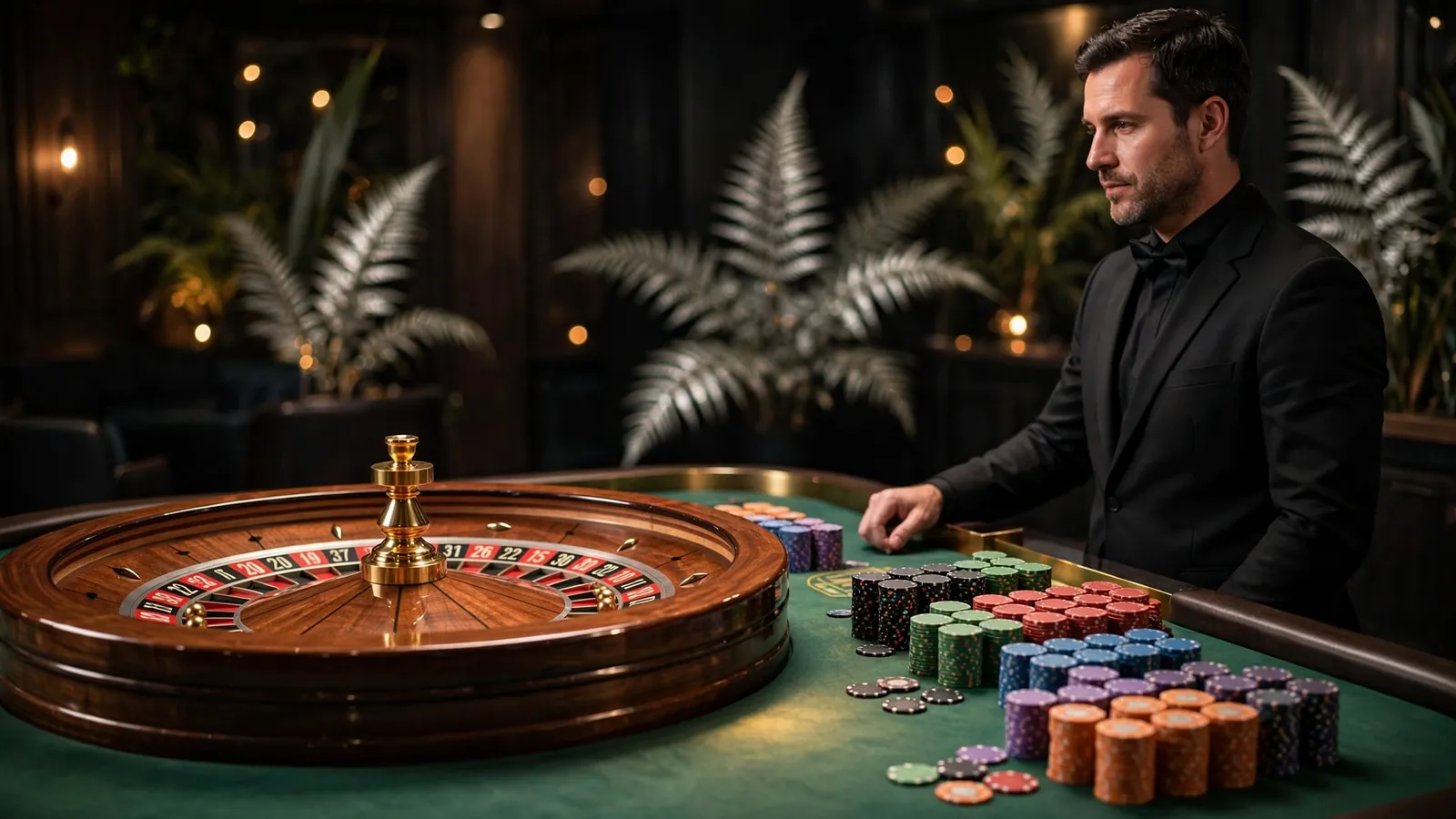
Table of Contents
- What a Live Roulette Table Actually Shows
- Which Roulette Sites Can Serve New Zealand Players in 2026?
- How to Assess an Offshore Live Roulette Site
- Playing Live Roulette Online: The Connection Can Be Part of the Game
- Double Ball Roulette and Other Table Formats
- Roulette Odds, House Edge and the Limits of Strategy
- Free Play, Free Bets and What You Can Confirm
- Automatic Roulette: What the Available Information Does—and Doesn’t—Show
- How a Live Roulette Round Moves
- Choosing a Live Roulette Game Without a Catalogue
What a Live Roulette Table Actually Shows
A live roulette table is not simply a digital animation made to resemble a casino. The defining difference is that the game is presented from a real setting: live dealer games use physical wheels and are run from professional studios or casinos. What you see on screen is a video broadcast of that setting, with a real dealer hosting the game.
For Kiwi players, “live” describes how the game is delivered, not a special kind of roulette wheel. The table is filmed and streamed, and the live video feed brings the dealer and physical equipment to your device. You are watching an event taking place in real time rather than a computer generating an entirely virtual scene.
That distinction can be easy to miss when the video is framed tightly around the table. The studio may not dominate the screen, but it is the working environment behind the broadcast. A professional dealer operates the physical wheel, while the video feed lets you follow the presentation as it happens. The dealer is not a character in a prerecorded sequence; the format is built around a live person and real equipment.
Live dealer games also allow players to interact with professional dealers. That makes the experience different from playing against software alone: there is a human host on screen, and the broadcast connects the player to the live table. The interaction is part of the format, although the precise features available can depend on the game and service. The essential point is the live connection between the studio or casino, the dealer and the viewer.

The phrase “video roulette” can describe the same basic idea when it refers to roulette shown through a live video stream. It should not be confused with a purely computer-rendered roulette game just because both appear on a screen. In a live dealer game, the physical wheel and dealer are presented through video; the display is the route into the table, not proof that the underlying game is virtual.
This format is still an online experience. You do not enter the studio or handle the wheel; you watch the broadcast and take part remotely. The camera view is therefore central: it is how you see the dealer and the real table, and how the game reaches you. A studio production can make a live table look polished, but its defining feature is not decoration. It is that the game is hosted with real equipment and transmitted as it happens.
So, when you see live roulette described as a studio game, the useful thing to understand is straightforward: a professional dealer runs a physical wheel, and a live video feed carries that table to players. That is what separates this format from roulette presented only as a digital simulation.
Which Roulette Sites Can Serve New Zealand Players in 2026?
Choosing a live roulette site in New Zealand means checking the details that matter to you before you play. Use this list as a concise reference for the information available about each operator.
Payout speed: 1-3 business days Wintino lists a payout speed of 1–3 business days, a useful detail for you to consider when reviewing its live roulette offering.
License: Curaçao Gaming Authority, licence no. OGL/2024/165/0185 BitStarz lists a Curaçao Gaming Authority licence, number OGL/2024/165/0185. You can use the licence detail as part of your operator checks.
License: 07017519840 · Payout speed: 1-3 business days Zotabet lists licence number 07017519840 and a payout speed of 1–3 business days. These details give you two concrete points to consider.
License: Tobique Gaming Commission, licence no. 0000091 7Bit Casino lists a Tobique Gaming Commission licence, number 0000091. You can check this licensing information when assessing the operator.
License: Tobique Gaming Commission, licence no. 0000002 Ricky Casino lists a Tobique Gaming Commission licence, number 0000002. The licence detail is the available reference point for your review.
License: Malta Gaming Authority, licence no. MGA/B2C/370/2017 Play Grand lists a Malta Gaming Authority licence, number MGA/B2C/370/2017. You can take this information into account when considering the operator.
License: Tobique Gaming Commission, licence no. 0000064 Neospin lists a Tobique Gaming Commission licence, number 0000064. This gives you a specific licensing detail to check.
License: Malta Gaming Authority, licence no. MGA/B2C/394/2017 N1 Casino lists a Malta Gaming Authority licence, number MGA/B2C/394/2017. You can use that detail as part of your review.
Payout speed: 1-3 business days Lamabet lists a payout speed of 1–3 business days. You can consider this detail when reviewing its live roulette offering.
The rules for online casino gambling in New Zealand changed during 2026. That matters if you want to play live roulette online: the legal position depends not only on where a site is based, but also on whether it is covered by the new licensing process and what stage that process has reached.
Before the change, New Zealand had no domestic licensing system for online casinos. The law did not prohibit Kiwi players from accessing offshore sites, but those services were not licensed or supervised by a New Zealand regulator. There was no local online-casino licence for an offshore operator to hold.
The Online Casino Gambling Act 2026 took effect on 1 May 2026 and established the country’s first domestic licensing regime for online casino gambling. Its scope includes live dealer tables, under the same licence category as online pokies and digital table games. The Act permits a maximum of 15 licences for the sector. That is a ceiling on the number of licensed operators, not a promise that every applicant will be approved.
The transition to a licensed market
The period between the Act taking effect and 1 December 2026 is a transition, not an instant switch from open offshore access to a fully established market. Online casino providers that were already serving people in New Zealand before 1 May may continue during this period, subject to the Act’s transitional rules.
Operators that do not apply for a licence under the new regime must stop providing online casino gambling to people in New Zealand by 1 December 2026.
The important date for operators that do not apply is 1 December 2026: they must stop providing online casino gambling to people in New Zealand. From that date, the new rules restrict legal access to operators approved under the licensing regime. The Act allows no more than 15 licensees.
A provider with an application still awaiting a decision is treated differently from one that has not applied. During the transition, an applicant may continue operating without advertising until the Department of Internal Affairs (DIA) reaches a decision. If an application is declined, the provider must stop its New Zealand online casino operations and leave the market. So a site’s presence during the transition does not, by itself, tell you whether it will be able to keep serving Kiwi players afterwards.
The licensed system is not expected to be fully operational until 2027. The dates still matter: 1 May 2026 marks the start of the framework, while 1 December 2026 is the point at which providers that have not applied must cease service. They are distinct stages, not competing descriptions of one launch date.
What to check before playing
There is no separate Kiwi-specific gambling licence. Instead, the new regime creates a domestic licensing system for online casino providers, including those offering live roulette. If you are checking a provider’s status, use the DIA to confirm whether it holds an approved licence or has an application in progress. Do not treat a site’s own statement about its status as confirmation from the regulator.
An application in progress and an approved licence are not the same thing. Nor does an offshore licence, on its own, establish that a provider has been approved under New Zealand’s new regime. During the transition, the rules allow certain existing providers and applicants to keep operating under specified conditions; after the transition, the approval status is central to whether a provider may continue serving players here.

This is a change from the earlier position, when offshore online casinos could be accessed but were not overseen by a New Zealand online-casino regulator. The new framework creates a local route to approval, but it does not mean that every offshore live roulette site has a New Zealand licence, or that every site available during the transition will remain available afterwards.
For a player considering a live dealer table, the practical distinction is between a provider’s current access and its status under the developing licensing system. Check the DIA’s information rather than assuming that a site’s availability means it has been approved. And if its application has not been approved, the fact that it may still be operating during the transition does not settle what happens after that period.
How to Assess an Offshore Live Roulette Site
Kiwi players can access live dealer games at international and offshore gambling sites. That access does not, by itself, tell you who oversees a site or what standards it must meet. Before you consider a live roulette table, check whether the operator is regulated by a recognised gambling body.
Treat the licence as something to verify, not a badge to take on trust. A logo or licence number displayed on a website is a starting point, not proof on its own. Check that the operator’s name and licence details can be confirmed with the regulator said to have issued the licence. If those details cannot be matched, or the regulator cannot be identified, you have not established that the site is regulated.
A logo or licence number on a website is only a starting point; you should verify that the operator’s name and details match those held by the regulator.
The distinction matters because a site can look polished while leaving basic questions unanswered. Who is responsible for operating it? Which gambling body oversees it? Does the licence information refer to the operator you are considering, rather than another company? A clear answer gives you something concrete to assess. A vague claim of being “licensed” does not.
Check the operator, not just the table
A live roulette game is only one part of the service. The licence check should concern the company providing access to the gambling site, not merely the studio or game shown on screen. A table may appear professional, but its presentation does not establish who is accountable for the overall site.
Look for the legal name of the operator and compare it with the name attached to the licence. If the website uses a trading name, make sure the relationship between that name and the licensed entity is clear. Where the details conflict or the operator is difficult to identify, do not assume that a licence belonging to a different company covers the site.
You can also confirm an operator’s licence status with New Zealand’s Department of Internal Affairs. That check is distinct from asking whether an offshore gambling body regulates the site: one does not automatically establish the other. Keeping those questions separate helps avoid treating an overseas licence as a New Zealand approval.

What a licence can—and cannot—tell you
Regulation by a recognised gambling body is a meaningful check on who oversees the operator. It is not a promise that every part of the service will suit you, that a particular roulette table will be available, or that every dispute will be resolved in your favour. Nor does the existence of a licence turn an advertising claim such as “best live roulette” into an independently established fact.
The same caution applies to claims about exclusive tables, special versions or tricks for improving play. A site’s wording may describe its own offer, but it does not substitute for checking the operator’s regulatory status. Keep the questions in order: first establish who runs the site and whether a recognised gambling body regulates it; then decide whether the service and its claims are worth considering.
A search for the best live roulette site can encourage quick comparisons based on branding or a prominent table. Those signals are not the same as evidence of oversight. If a site makes it hard to find its operator or licensing information, that difficulty is itself a reason to pause rather than fill in the gaps with assumptions.
A practical check before you play
Use a short sequence rather than relying on the first reassuring detail you see:
- Identify the legal entity operating the site.
- Find the stated regulator and licence details.
- Check those details with the gambling body named.
- Confirm the operator’s licence status with the Department of Internal Affairs where relevant.
- If the names or status do not line up, do not treat the site as verified.
This approach is useful whether you arrive at a roulette table through a live casino page or a broader online casino. The game label does not change the central question: can you establish that the operator is regulated by a recognised gambling body?
A positive result is a basis for further consideration, not an endorsement. A failed or unclear check leaves you without a reliable basis for treating the site as regulated. That is a more useful conclusion than a ranking of “best” tables built on claims you cannot verify.
Playing Live Roulette Online: The Connection Can Be Part of the Game
A live roulette game depends on a video connection between the studio and your device. That gives you a view of a real table, but it also means the online experience can be affected by technical interruptions. A specialist review notes that live dealer games can encounter technical problems. The point is not that every session will be disrupted; it is that a smooth stream cannot be guaranteed.
A brief pause or frozen picture can leave you unsure whether the table is still moving, whether the betting window is open, or whether your last action registered. Those are practical uncertainties, not details of roulette strategy. If the picture stops, avoid making another selection simply because you cannot see the result of the first. First work out whether the game is still active and whether your previous action appears in the table interface.

When the picture or connection falters
The causes can vary. The stream may stop loading, the image may freeze, or the game may become unresponsive on your device. A problem can be local to your internet connection or device, or it can occur elsewhere in the service; a frozen screen alone does not tell you which. Do not assume that refreshing a page or reopening a game will preserve the same point in a round.
If you lose the picture, give yourself a moment to check the connection and the information still visible on screen. If you cannot tell whether a bet was accepted or what happened next, avoid guessing. Look for a record or status indicator within the game or account, if one is available, and contact the operator’s support team if the situation remains unclear. Keep the time of the interruption and any relevant screen details to hand. These steps help you explain what happened; they do not guarantee a particular outcome.
The distinction matters because a live stream is not the same as a recording. What you see is tied to an active table, so a delay or interruption can make it harder to follow events as they happen. You may be able to hear or see the dealer again after reconnecting, but that does not by itself establish whether your earlier action was accepted. Check the game’s displayed status rather than relying on an incomplete picture.
Before you play
You can reduce avoidable connection trouble by using a stable internet connection and keeping the device’s browser or app responsive. Close other activity that is using the connection if it is slowing your device, and avoid switching networks in the middle of a session where possible. These are general precautions, not a promise that the stream will remain uninterrupted: problems can still occur outside your control.
To reduce avoidable connection trouble, use a stable internet connection and close other activity that may be slowing down your device.
It is also sensible to know how to reach support before you start. If a disruption affects a round, a clear description is more useful than repeatedly reopening the table without knowing what happened. Do not assume that a display delay means a bet was lost, accepted or cancelled; confirm the status through the service’s available records or support channel.
For anyone choosing to play live roulette online, the stream is part of the experience and part of its uncertainty. A table may be live, yet your view of it still travels through a technical connection. Keeping that limitation in mind helps you respond calmly if the screen stops behaving as expected.
Double Ball Roulette and Other Table Formats
The phrase “double-ball roulette” sounds specific, but a name alone does not tell you what a table offers. It may lead you to expect a variation involving two balls, yet that expectation is not enough to establish the game’s rules, equipment or availability. A live double-ball roulette table should not be treated as confirmed simply because the phrase appears in a description or a page title.
Live dealer roulette uses a physical wheel in a professional studio. That makes it different from a digital simulation, but it does not mean every table uses the same layout or format. Nor does the general use of real wheels establish that a particular variant is being streamed. The distinction matters: a real wheel confirms the nature of the live format, not the identity of every game a site might advertise.

Before joining a table described as a variation, look for its own rules and an explanation of how the round works. A useful description should make clear what equipment is used, what the player can bet on and how outcomes are settled. If those details are absent or ambiguous, the name cannot fill the gap. You should not assume that a version follows standard roulette rules, or that its label accurately describes the play.
This is especially relevant when a game name suggests an unusual feature. A second ball, for instance, would affect how you understand the round, but the label by itself does not say how that feature operates. It does not explain whether there are extra betting options, how results are determined, or whether the table is available to you. Those are details to confirm in the game’s rules, not to infer from a short title.
The same caution applies to broader descriptions such as “roulette live.” They identify a live-dealer format in general, not a particular wheel, table or set of rules. A live table’s physical equipment and studio setting are part of the format; the specific game still needs its own clear description. When a site presents several formats, compare what each one says rather than relying on labels that sound alike.
Some searches also combine a game type with a payment method, such as paying by phone bill. These are separate questions. A payment phrase does not establish that a specific roulette format is offered, and a table description does not confirm which deposit methods a site accepts. Keep the two checks distinct rather than treating one as evidence for the other.
Checking Table Rules
- Identify the actual table you wish to play.
- Read the specific rules for that table format.
- Confirm how outcomes are settled.
- Verify what equipment is used for the game.
For any unfamiliar live roulette format, the practical standard is straightforward: identify the actual table and read its rules before playing. If the game’s operation is not explained, you cannot reliably know what its name means. That is a limit on what the label tells you, not a reason to assume either that the format exists at a particular site or that it follows familiar roulette conventions.
Roulette Odds, House Edge and the Limits of Strategy
The house edge is a measure of the casino’s mathematical advantage over time. For live European roulette, it is usually around 2.7%; for live American roulette, it is around 5.26%. These figures describe the expected cost of play across many wagers, not a prediction of what will happen in your next round.
The difference matters when you compare table formats. The stated edge is higher for American roulette, so its mathematical cost is greater over sustained play. That does not mean a particular session will follow the average: short-term results can vary, and a player may win or lose regardless of the published percentage.
What strategy can—and cannot—change
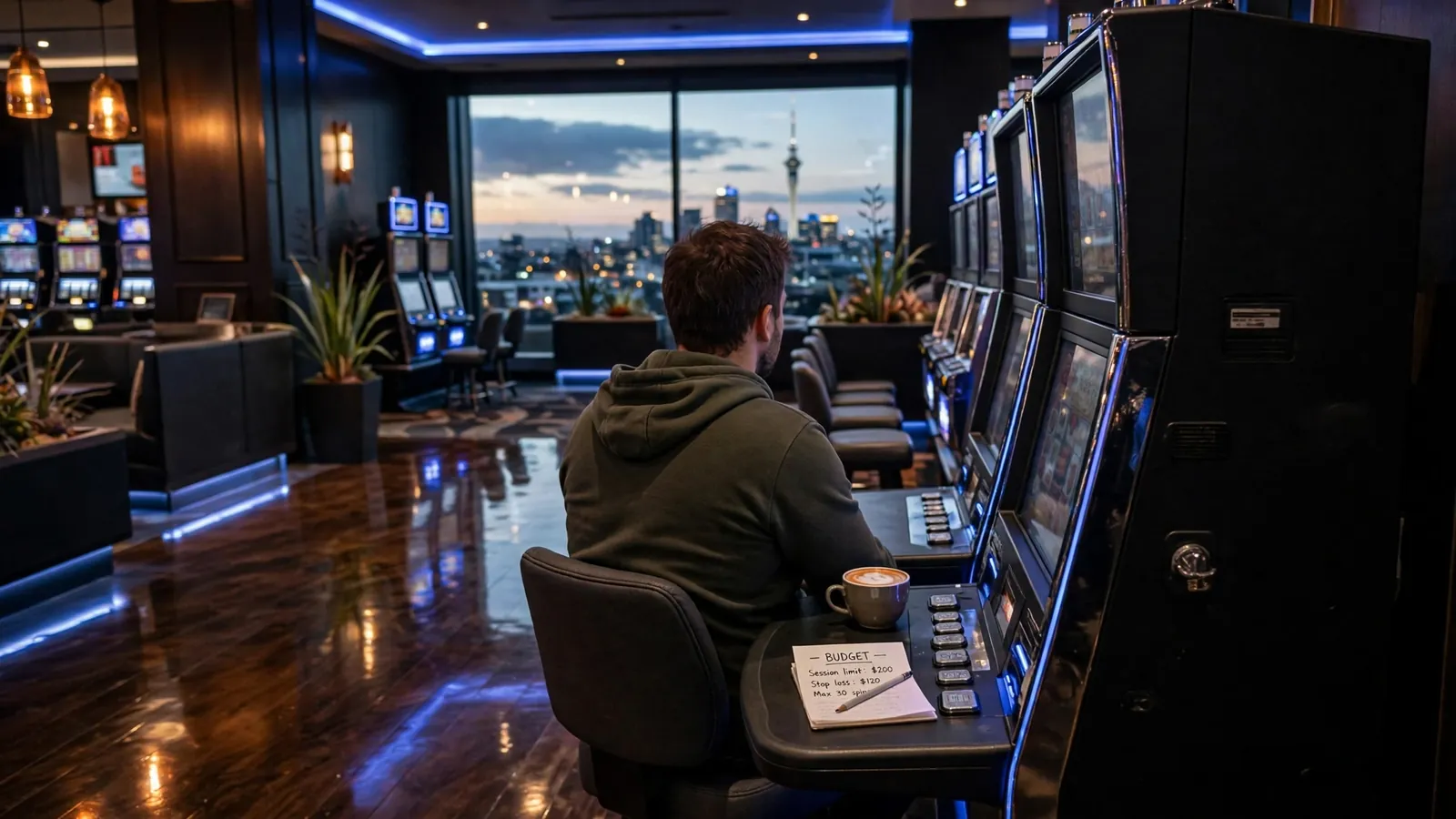
A live online roulette strategy can help you make deliberate choices about how you play. For instance, you can decide in advance what you are willing to stake and when to stop. Those decisions may help control your exposure, but they do not remove the house edge or make a losing outcome less likely by force of will.
Claims that a betting pattern can reliably overcome the mathematical disadvantage deserve caution. A sequence of wins or losses does not, by itself, establish what the next result will be. Nor does changing your bet after a result alter the house edge. A strategy may change the size or timing of your wagers, but it cannot turn roulette into a game with guaranteed returns.
The same distinction applies to claims about instant live roulette. A live stream may let you take part as events unfold, but immediacy is not an odds advantage. Speed and presentation affect the experience; they do not make the mathematical cost disappear.

If you compare European and American roulette, use the house edge as a grounded point of reference rather than treating strategy claims as a substitute for it. The lower stated figure gives European roulette the smaller mathematical disadvantage of the two. It is still a casino game with an edge in the house’s favour, not a dependable way to make money.
You can choose how much uncertainty you are willing to accept, but no betting system changes the figures above. Treat strategy as a way to set boundaries around your play, not as a method for predicting results or guaranteeing a profit.
Free Play, Free Bets and What You Can Confirm
Free access to live roulette is not something to assume. Live dealer games are typically not offered in free-play form because operating a table with a dealer and live production carries significant costs for a casino. That makes free live roulette less straightforward than a game that can run without a live table.
It also helps to separate a few things that can sound similar. Free play means trying a game without wagering your own money. A free bet is an offer with conditions attached; it does not necessarily mean you can use a live roulette table without charge. Free spins refer to a different kind of promotion and should not be taken as evidence that roulette itself is available for free.
If you see an offer described as a free live roulette game, check what it actually lets you do. Does it provide access to a live table, or does it refer to another game or a promotional credit? The wording alone may not answer that. Read the offer’s terms before treating it as a way to play roulette at no cost.
A headline mentioning ten free spins, for instance, does not establish that those spins apply to roulette or to a live dealer game. Nor does the phrase “free bet” tell you by itself which games are eligible. Look for the game conditions and any requirements attached to the offer, rather than inferring access from its label.

If no clear free-play option is shown for a live table, the safer assumption is that the table is not available to try without wagering. A promotional offer, if one is presented, is not the same as a free-play mode: its conditions determine how it can be used. Avoid relying on a search result or a banner alone; the operator’s own terms should explain the offer.
The practical limit is simple: live roulette involves the costs of running a live dealer table, so free access is not typical. You can confirm only what the game page and offer terms actually state. Treat claims about free play, free bets or spins as separate claims, and do not assume one guarantees another.
Automatic Roulette: What the Available Information Does—and Doesn’t—Show
“Automatic roulette” can sound like a precise table description, but the label alone does not tell you what happens during a game. It does not confirm how the wheel is operated, whether a dealer is present, or what part of the round—if any—is automated. Those details matter if you are comparing a live table with another format.
Live dealer games use physical equipment, including real wheels, and are broadcast from a studio or casino through live video. You can interact with professional dealers during play. That describes the broader live format; it does not establish that a particular table is automatic, or explain what “automatic” would mean for its wheel or dealing process.
The distinction is practical. A name or short description may be used to draw attention to a format, but it is not a substitute for a clear explanation of the game. Before relying on a label, look for the table’s own rules and description. Check whether they identify the equipment and explain how a round is run. If they do not, you cannot safely infer the mechanics from the word “automatic” alone.
The same caution applies to “auto live roulette” as a description. “Live” indicates a streamed dealer game in the broad sense; “auto” does not, by itself, verify a particular feature or table. Nor does a general catalogue of live dealer games confirm that an operator offers this specific format. Availability needs to be stated for the table itself, rather than assumed from a broad category.

For Kiwi players, the useful takeaway is modest: treat automatic roulette as an unconfirmed label unless the operator provides a specific description of the table and its rules. That does not mean the format is unavailable; it means the label alone cannot establish either its mechanics or its presence. A clear explanation is more useful than a confident-sounding name.
How a Live Roulette Round Moves
A live roulette round runs to a shared schedule rather than waiting for each player to act at their own pace. The betting period is limited, so you need to make your choices before that window closes. This is one reason live games can feel brisk, even when you are watching a real table rather than playing against software alone.
If you are learning how to play live roulette, the useful point is not to rush into a decision. It is to understand that the table keeps moving: you have a set opportunity to place bets, and the round proceeds once that opportunity ends. The precise time allowed can vary between games, so do not assume that every table gives you the same amount of time.
That pace affects how you approach a session. Before joining a round, take a moment to familiarise yourself with the displayed betting area and any available game information. Once betting is open, use the time to make your choices calmly. If you are still trying to work out the interface as the window runs down, the speed of the format can become a distraction.
Live play also means that your decisions take place alongside those of other players at the table. The shared rhythm can make the experience feel more immediate, but it does not mean you need to match anyone else’s pace. You can watch a round rather than join it, or wait until you are ready to take part.

The practical trade-off is straightforward: a live table offers a scheduled, shared round, not an open-ended pause while you consider each move. Pay attention to the time available and choose at a pace that suits you. If the round moves faster than you are comfortable with, waiting for another opportunity is more sensible than making a rushed choice.
Choosing a Live Roulette Game Without a Catalogue
A live roulette table is more than a roulette wheel shown on screen. It is a real game broadcast from a studio or a casino, with a dealer taking part while players join remotely. That gives you a clear general feature to compare: the game is conducted live, rather than generated entirely by software.
Beyond that, the label “live roulette” does not tell you what a particular table offers. It does not identify the operator, the dealer, the setting or any table-specific feature. Those details need to be checked against the actual game listing and its information before you decide whether it suits you. A name or thumbnail alone is not a reliable description.
It also helps to separate what the format establishes from what a particular product might promise. A live broadcast means you can follow a real dealer and wheel as play happens. It does not, by itself, establish that tables across different sites have identical presentation, rules or options. Treat each listing as a separate offering rather than assuming that one description applies to every live roulette game.
If you are comparing options, focus on information attached to the specific table: its displayed rules, any stated limits and the details shown before you enter. If that information is not clear, avoid filling the gap with assumptions based on another table’s name or appearance. A live stream can make a game look familiar while leaving important product details unconfirmed.
This is a narrower basis for comparison than a catalogue of named games, but it is also more dependable. The shared feature is the live dealer broadcast; the rest should be judged from the individual table’s own description. A polished studio is visible. What it means for the game is a separate matter.
Can New Zealand players play real-money live dealer games at offshore casino sites?
Yes, New Zealand players can access offshore live dealer games. From 1 December 2026, providers must be approved under the new licensing regime to legally accept New Zealand players; check an operator’s status with the Department of Internal Affairs.
Which live dealer games can New Zealand players usually access?
You can find live roulette, blackjack and baccarat among the live dealer games available to New Zealand players.
How fast do live casino withdrawals arrive?
Crypto payouts often clear in under an hour, while POLi and e-wallet withdrawals typically take 24 to 48 hours. Bank transfers can take 5 to 7 business days.
How many operators can hold a licence?
A maximum of 15 operators can be licensed for New Zealand’s online casino sector, including live dealer games.
Do live dealer games have a house edge?
Yes. Live European roulette usually has a house edge of about 2.7%, while American roulette is around 5.26%.
Can players deposit and withdraw using New Zealand dollars at live casinos?
Yes, many operators allow deposits and withdrawals in New Zealand dollars.
Published by the Casino Expert NZ team.