Blackjack for Real Money in New Zealand
 Available in US
A practical guide to online formats, table variations, decision-making, app play, payouts and payment considerations.

Table of Contents
- How Online Blackjack Works: RNG or Live Dealer
- Blackjack Rules That Change From Table to Table
- What New Zealand’s 2026 Online Casino Rules Mean for Players
- Can You Make Money Playing Blackjack?
- How to Make Decisions at the Table
- Using a Blackjack App for Real-Money Play
- Blackjack App Payouts and the Even-Money Question
- Playing on an iPhone: Data Use and Practical Limits
- Real-Money Blackjack: Currency and Payment Methods
- What to Expect From Live Blackjack
How Online Blackjack Works: RNG or Live Dealer
Online blackjack is delivered in two main formats: a digital game dealt by software and a game presented by a live dealer. Both put the cards and player decisions on screen, but the source of the deal and the pace of a round differ. That distinction matters whether you want to try blackjack online for money or play without risking a cash stake.
Software-dealt blackjack
In RNG blackjack, a random number generator (RNG) determines the cards. The software shuffles the virtual deck and deals a hand; there is no physical table or dealer handling cards for your round. You make your choices through buttons on the screen, and the game displays the result.
The software format is built for quick play. A hand can move from deal to result without waiting for a camera feed, a dealer to handle cards, or other players to act. A specialist review gives a comparison of roughly 15 to 20 seconds for an RNG hand, against 30 to 45 seconds for a live-dealer hand. Actual pace can depend on the game and how quickly you make your decisions, so those timings are a reference, not a promise for every round.
That speed can suit a short session or someone who prefers a direct interface. It also means rounds can follow one another quickly. If you are playing for money, the faster pace is a practical feature to consider, not evidence that the software gives you a better chance of winning. The same format can also be offered with play money, letting you follow the interface without placing a cash stake. Check which version is open before you start: a practice balance and a real-money balance are not interchangeable.
Games dealt by a live dealer
With live-dealer blackjack, a person conducts the game at a physical table while you take part through an online interface. A video feed shows the dealer and cards, while on-screen information presents the round and the choices available to you. You do not handle the cards yourself; the interface carries your decisions to the game.

Because the game depends on a live feed and the dealer’s actions, it moves at a more measured pace than software-dealt blackjack. A specialist review places a live round at roughly 30 to 45 seconds from deal to result, compared with 15 to 20 seconds for an RNG round. The stream can add a delay, and the dealer must carry out the steps of the round. The comparison is useful when deciding what pace you prefer, but it cannot guarantee how long a particular hand will take.
The live format can make the proceedings easier to follow as a table game: you see cards being dealt rather than only an animated or software-generated sequence. In return, you depend on the video connection and the game’s live schedule. If the feed pauses or lags, the experience may feel less immediate than a software game. Actual cards do not remove the need to understand the interface; your permitted actions still have to be selected online.
Which format fits your purpose?
Choose by the kind of session you want, rather than assuming one format is inherently more legitimate. RNG blackjack is software-based and faster. Live-dealer blackjack uses physical cards, a dealer and a stream, so it tends to take longer. Neither label alone tells you what the table’s particular rules or terms are; those can vary between games.
If you are comparing sites for real-money blackjack, identify the format before looking at the stake or opening a table. A game labelled “live” should show a dealer-led round through video, while an RNG game runs through software. For a no-money session, look for a clearly identified play-money option rather than assuming every free-looking game is only for practice. Conversely, a game that shows cards on screen is not necessarily a live table: the cards may be generated by software.
The practical split is simple. Pick RNG when you want a faster, software-run round; pick a live dealer when seeing a person deal the cards is important enough to accept the stream and slower pace. That tells you how the game is delivered, not whether playing it will make money.
Software-based game using a random number generator. It is built for quick play with rounds typically lasting 15 to 20 seconds.
Physical cards dealt by a person via video stream. It offers a measured pace with rounds typically taking 30 to 45 seconds.
Blackjack Rules That Change From Table to Table
Blackjack is a contest between your hand and the dealer’s. The aim is to reach 21, or get as close to it as possible without going over, while finishing with a higher total than the dealer. Going over 21 means your hand cannot win, even if the dealer later exceeds that total.
A round starts with two cards for each player and two for the dealer. In many versions, the dealer’s cards are dealt with one face up and one face down. That gives you some information about the dealer’s hand, but not the full picture. The exact rules shown at the table matter because they determine what you may do next and how the dealer must play.
The choices during a hand
After the initial deal, you can choose to hit, asking for another card, or stand, keeping the total you already have. You can also double down or split, if the table’s rules allow those moves in your situation.
Doubling down changes how you play the hand after the deal; splitting treats a pair as two separate hands. These options can affect the amount at stake and the way a round unfolds, so check the table rules before playing for real money. The labels are familiar across blackjack games, but the conditions for using a move can differ.

The dealer’s play is not simply another set of choices. The table rules prescribe how the dealer acts, including what happens on a soft 17. A soft hand contains an ace counted in a way that avoids an immediate bust; a soft 17 is a hand totalling 17 with that flexibility. Some tables require the dealer to draw on soft 17, while others require the dealer to stand. That distinction can change the dealer’s final hand and, in turn, the result for players.
Details worth checking before a round
The number of decks used is another rule detail to look for. It does not change the basic aim or the names of your available actions, but it is part of the game’s conditions. A table may also allow surrender: in that case, you give up the hand and lose half of your bet rather than continue playing it. Not every game offers this choice, so do not assume it is available.
These variations matter whether you are playing blackjack in a casino app or in a browser. The game can look much the same while applying different rules. Before you place a bet, look for the table information covering the dealer’s treatment of soft 17, the deck count, and whether surrender is permitted. If a rule is unclear, choosing another table is more sensible than discovering its effect after the hand has begun.
A table’s rules are separate from your decisions within a hand. Knowing that you can hit, stand, double down or split does not mean every option is available at every point. The game information should explain the conditions. Take a moment to read it before starting, particularly when switching between real-money blackjack games: the basic objective remains consistent, but the details that govern a round may not.
Table rules, such as the dealer’s action on a soft 17, the number of decks used, and the availability of the surrender option, can vary between games.
The starting deal is only the beginning. Once your cards are out, your choices and the dealer’s required play determine how the hand develops. Understanding the table’s terms gives you a clearer picture of what each option means before money is involved.
What New Zealand’s 2026 Online Casino Rules Mean for Players
For Kiwis considering blackjack for real money in New Zealand in 2026, the legal position depends in part on when they play and where the casino is based. Online gambling is permitted for players here when the casino is located overseas; the law does not permit online casinos to be based in New Zealand. That distinction matters: the rules are changing, but the new system does not turn every site available to a Kiwi into a locally licensed casino.
The Online Casino Gambling Act 2026 took effect on 1 May 2026, creating New Zealand’s first domestic licensing framework for online casino gambling. Before that date, offshore online casinos were not licensed or supervised by a New Zealand regulator. A player using one had no domestic government recourse if a dispute arose. The new Act changes the regulatory framework, but its protections and requirements are being introduced through a transition rather than appearing everywhere at once.
The Department of Internal Affairs oversees the framework. The Gambling Commission has a separate role: it issues online casino licences and approves changes to licence conditions. The Act provides for a system with no more than 15 licences, allocated by the Department of Internal Affairs. These responsibilities should not be blurred: oversight of the framework and the issuing of licences sit with different bodies.

What the transition means
The Act began a transition on 1 May 2026, with the window ending on 1 December 2026. Online casinos that were already serving customers in New Zealand before the Act took effect may continue operating during that period under its transitional provisions. This does not mean that every offshore casino can remain available indefinitely or that all operators are already licensed under the new regime.
The full licensed system is not expected to be operational until 2027. During the transition, operators are subject to different conditions depending on whether they were already serving New Zealand customers and whether they are seeking a licence. Operators without a licence must stop offering online casino gambling to New Zealand players from 1 December 2026. Providers that have not applied for a licence must also cease conducting online casino gambling in the country by that date. If an application is declined, the provider must stop its New Zealand operations and leave the market.
That timing makes the date you are reading this relevant. A site’s availability during the transition is not, by itself, proof that it holds a New Zealand licence. Nor should the future licensing framework be treated as if it were already fully in place. The law is moving from a period with no domestic oversight of offshore online casino gambling to a regulated system, but the change takes time.
Licensing Transition
Operators without a licence must stop offering online casino gambling to New Zealand players from 1 December 2026.
For someone looking to play blackjack online for real money, the practical point is to distinguish the legal status of online gambling from the status of a particular operator. Players can legally gamble online when the casino is not based in New Zealand; the new Act establishes a process for licensing providers, rather than making offshore availability equivalent to local licensing. The framework also assigns enforcement responsibilities to regulators, while a player’s access to an offshore site during the transition does not establish that the site has been approved.
The rules will continue to matter beyond the transition: licensed online casino operators must meet the conditions attached to their licences, and the Gambling Commission can approve changes to those conditions. As the regime develops, dates and status are part of the legal context, not fine print. A casino’s current availability and its position under the licensing system are separate questions.
Can You Make Money Playing Blackjack?
Yes, you can win money in a blackjack session. But a win on one visit does not mean the game provides dependable income: results vary from hand to hand, and a player can lose even when making sound decisions. Over time, the house edge gives the casino a statistical advantage, not a guarantee about what will happen in any particular session.
The house edge is the share of wagers a casino is expected to retain over many hands, under specified rules and assumptions. It is not a fee taken from each bet, nor a forecast of how much you will lose in a short session. Your actual result can be better or worse; the longer-term average is not a promise about your balance.
The conditions behind a published edge matter. For eight-deck blackjack with a 3:2 natural-blackjack payout, the dealer standing on soft 17, doubling after a split, no surrender and resplitting allowed to four hands, the house edge is approximately 0.43% when perfect basic strategy is used. Change the table rules or payout and that figure no longer describes the game. It should not be treated as a universal rate for every online table.

Payout terms can make a meaningful difference. If a natural blackjack pays 6:5 instead of 3:2, the house edge rises by approximately 1.4 percentage points. That change does not dictate the outcome of the next hand, but it makes the game less favourable to the player over time. A displayed payout is therefore more than a minor detail when judging whether a table offers a reasonable chance of keeping money in play.
This is why there is no fixed answer to how much you can make playing blackjack. A player might leave ahead after a short session, while another might lose; neither result establishes a reliable earning rate. Online play does not remove that uncertainty. A winning run is possible, but it cannot be converted into a dependable wage or a promised return.
The same distinction applies to stories about large wins. A reported peak result says little about what a typical player can expect, and it does not change the house edge. Without a defined period, stake and set of table rules, a headline amount cannot tell you how much you are likely to win.
Attention The house edge is a long-run probability and not a personal forecast; winning a single session does not establish a reliable earning rate.
If you play for real money, treat any money wagered as money you could lose, rather than as an investment or expected income. The house edge describes a long-run probability, not a personal forecast. Understanding that difference is more useful than trying to infer a regular earning amount from a favourable session.
How to Make Decisions at the Table
Blackjack decisions are made one hand at a time. You can take another card, stand on your total, double down, or split a pair where the table permits it. The choice depends on your cards, the dealer’s visible card and the rules in force. No decision can guarantee a win, and changing your play after a loss cannot make earlier bets recoverable.
A strategy is useful only when it matches the table. Before relying on a chart or a set of recommendations, check details such as whether the dealer draws on a soft 17, how many decks are used, and whether surrender is allowed. These rules can change the appropriate choice in a given situation. A chart written for one version of blackjack may not fit another, even if the game looks much the same.
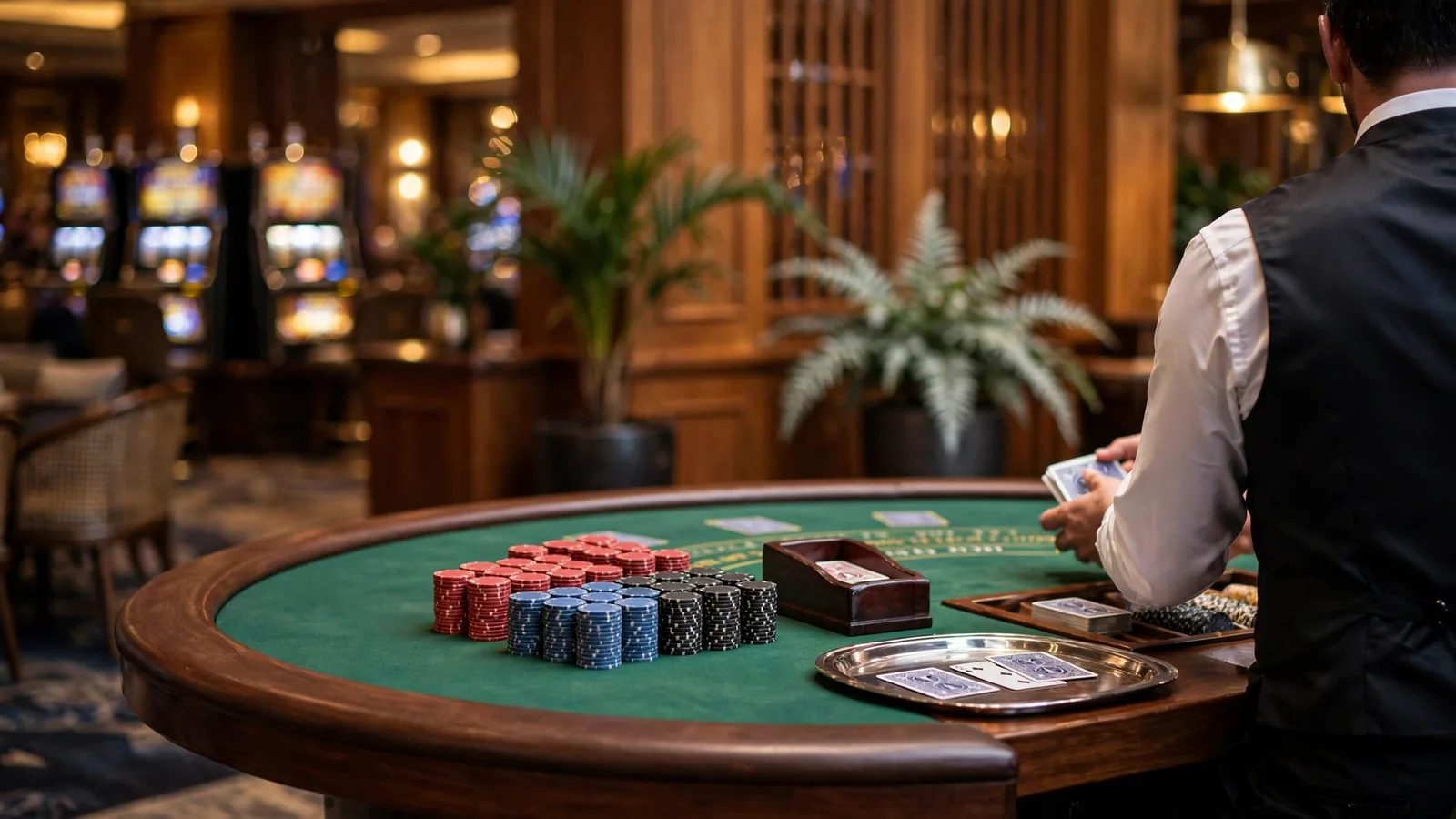
The dealer’s required play gives you a fixed point of comparison: they draw until their hand reaches at least 17, then stop. Some rules distinguish a soft 17—a hand containing an ace counted as 11—from other hands totalling 17. Check the table wording rather than assuming every dealer treats that hand identically.
Your own options also have conditions. Doubling down changes the size of your wager while limiting what you can do with the hand; splitting separates a pair into two hands, each played in turn. Those choices affect the money at risk, so consider them before acting rather than treating them as ways to rescue a poor result. Surrender, where available, can end a hand early under the table’s terms, but it does not erase the cost of the decision.
If you bet real money online, take a moment to read the game’s rules and decision controls before the first hand. Fast play can make it easy to act without checking which version of blackjack is on screen. A deliberate choice is not a promise to make money: it is a way to apply a consistent approach under the rules you are actually playing. When the hand ends, assess the next one on its own merits, not as a chance to win back what has already been lost.
Using a Blackjack App for Real-Money Play
Choosing a real-money blackjack site in New Zealand calls for checking the available operator information before you decide where to play. Use this list as a starting point, and confirm the blackjack terms that matter to you.
Payout speed: 1-3 business days You have a stated payout speed of 1–3 business days to consider when reviewing Wintino.
License: Curaçao Gaming Authority, licence no. OGL/2024/165/0185 BitStarz is listed with a Curaçao Gaming Authority licence, number OGL/2024/165/0185. You can use that licence detail as one point to check when considering the operator.
License: 07017519840 · Payout speed: 1-3 business days Zotabet has a listed licence number of 07017519840 and a stated payout speed of 1–3 business days. You can weigh these details when reviewing the operator.
License: Tobique Gaming Commission, licence no. 0000091 7Bit Casino is listed with a Tobique Gaming Commission licence, number 0000091. You can check this licence detail as part of your review.
License: Tobique Gaming Commission, licence no. 0000002 Ricky Casino is listed with a Tobique Gaming Commission licence, number 0000002. You can consider this detail when reviewing the operator.
License: Malta Gaming Authority, licence no. MGA/B2C/370/2017 Play Grand is listed with a Malta Gaming Authority licence, number MGA/B2C/370/2017. You can use the licence information as one factor in your review.
License: Tobique Gaming Commission, licence no. 0000064 Neospin is listed with a Tobique Gaming Commission licence, number 0000064. You can check this detail as part of your operator review.
License: Malta Gaming Authority, licence no. MGA/B2C/394/2017 N1 Casino is listed with a Malta Gaming Authority licence, number MGA/B2C/394/2017. You can consider the listed licence when reviewing the operator.
Payout speed: 1-3 business days Lamabet has a stated payout speed of 1–3 business days, which you can take into account when reviewing the operator.
A blackjack app is a route into an online casino, not a separate kind of game. Before you add funds, check whether the app offers real-money play or only a practice mode, and whether you have opened the version you intend to use. A balance shown on screen may be promotional or play money rather than withdrawable funds. Read the account and game labels rather than assuming that a familiar blackjack table is operating for cash.
If you want to play blackjack for real money, look at the conditions attached to the account as well as the game itself. The app should make clear what happens when you deposit, how a withdrawal is requested and whether any restrictions apply to funds linked to a promotion. Do not treat an advertised bonus as cash you can immediately use or withdraw: its terms may define when the bonus, and any winnings connected with it, become available.
- Confirm if the table uses your cash balance
- Check if blackjack is eligible for active bonuses
- Locate spending limit tools before playing
- Assume a bonus is immediately withdrawable cash
- Use autoplay features for placing bets
- Use credit cards or buy-now-pay-later payments
Specialist casino reviews report that bonuses can carry wagering rules and restrictions on which games count. That matters for blackjack because a promotion may exclude the game or count it differently from other casino games. Before accepting an offer, find the terms that specify eligible games, the required play and any limits on withdrawing funds. If the wording does not explain how blackjack is treated, ask the operator for clarification before opting in. Declining a bonus can be simpler than trying to untangle its conditions after play has begun.
Check the app’s conditions before playing
A short check before depositing can prevent confusion later:
- Real-money or practice mode: Confirm that the table is using your cash balance if that is what you intend. Practice play can be useful for learning the interface, but it does not establish that you are playing for money.
- Bonus participation: Check whether a promotion is active on your account and whether blackjack is eligible under its terms. If you do not want those conditions, look for a way to decline or opt out before you play.
- Account verification: Licensed operators must use stricter age and identity checks. Be prepared to complete the operator’s process, and do not assume that downloading an app alone creates a playable account.
- Spending controls: Licensed operators must provide spending limit tools. Locate them before playing, so you know where to set or review a limit rather than searching for the control while a session is under way.
- Autoplay: Licensed operators must not offer autoplay. Blackjack requires you to make decisions during play, so be wary of any feature described as placing or continuing bets for you automatically.
- Payment conditions: The rules for licensed operators prohibit credit cards and buy-now-pay-later payments. A payment option displayed by an app does not by itself establish that the operator is licensed or that the method is permitted under the licensing framework.
These checks concern the account and the app’s terms; they do not replace checking the individual table. The table may have its own rules and payout information, which can affect what a hand means and what a winning result returns. Read those details before placing a bet, especially if you have moved from a practice table to a real-money one. Do not assume that two tables with the same name have identical conditions.
For Kiwis, the app’s location is not the same thing as the operator’s legal status. Online casinos cannot be based in New Zealand under the Gambling Act 2003, while the Online Casino Gambling Act 2026 created a domestic licensing framework. Existing providers may continue during the transition described by the Act, so the position depends on the provider and timing. An app being available to download is not proof that its operator holds a New Zealand licence. Equally, playing at an offshore casino is not itself a reason to assume you will face a fine or prosecution.
Before Depositing
- Verify if the app is in real-money or practice mode
- Read the bonus terms for blackjack eligibility
- Complete the required age and identity verification
- Set a spending limit using account controls
- Confirm the available payment methods for both deposits and withdrawals
When using an app at home, keep the practical distinction between cash play and blackjack for practice in view. A practice balance lets you explore controls without placing real-money bets; it is not a source of winnings. With real-money play, the funds at risk are your own, and bonus conditions may add restrictions beyond the rules of the table. Set a spending limit before starting, use the account controls provided, and stop if the terms or balance display are unclear.
Blackjack App Payouts and the Even-Money Question
Before placing a real-money bet in a blackjack app, open the rules or paytable for the specific game. The natural-blackjack payout can differ between tables, even when the games look similar. A specialist review reports tables with both 3:2 and 6:5 payouts; treat that as a reason to check the game’s displayed terms, not as a guarantee about what any particular app offers.
A natural blackjack is a two-card hand that totals 21. The payout ratio describes the profit on a winning natural, separate from the original stake. At 3:2, a two-unit stake earns three units in profit. At 6:5, that same stake earns less: two units and two-fifths of a unit. The original stake is returned as well, so the profit figure is not the total amount credited.
That distinction matters because the ratios can look close at a glance while producing different returns on the same bet. If you are comparing blackjack tables inside an app, find the payout wording before you join; the game title alone may not tell you which ratio applies. Check that the stated terms refer to a natural blackjack, rather than assuming they describe every winning hand.

“Even money” is a separate expression. It means a profit equal to the amount staked, with the stake returned. It is not another way of writing 3:2 or 6:5. Nor does the phrase itself describe a strategy: it tells you about a payout, not whether a decision is favourable in a particular hand. Read the table’s rule for the situation in question rather than treating an even-money option as a general route to better returns.
A free-play version can help you see where an app displays its rules, but its presence does not establish the payout on a real-money table. Check the exact game and its terms again before staking money. A blackjack app can show a clear payout and still leave the outcome uncertain; a favourable-looking ratio is not a promise of easy money.
Playing on an iPhone: Data Use and Practical Limits
Live-dealer blackjack on an iPhone can make a noticeable dent in a mobile data allowance. A specialist review estimates that streaming a live table uses 500 MB to 1 GB of data per hour. The exact amount may vary with the stream and how long you watch, so treat that range as a planning guide rather than a guaranteed figure.
That matters if you play away from a Wi-Fi connection. A session that seems brief can still use a substantial amount of data, particularly when you return to the live table repeatedly. Check your mobile plan’s remaining allowance before you start, and keep an eye on data usage during play. If you are close to your limit, postponing the session until you have Wi-Fi is the straightforward option.
Data Usage
Streaming a live blackjack table on an iPhone is estimated to use between 500 MB and 1 GB of data per hour.
The figure relates to live-dealer streaming, not the size of a blackjack bet. Whether you are playing for real money on an iPhone, using house money, or considering a house-money blackjack side bet, the stream still needs data. The amount wagered does not tell you how much video data the session will consume.
This is a practical limit worth separating from the game itself: a mobile device can connect to a table, but the live video is what can make the session costly in data. If you want to keep data use predictable, account for the length of the stream, not just the time spent making decisions. A short round can involve more viewing than betting, and the data cost continues while the video is playing.
Real-Money Blackjack: Currency and Payment Methods
Before you fund an account for real-money blackjack, check which currency the casino uses and which payment methods it currently permits. Many international online casinos accept New Zealand Dollars, so you can avoid foreign-exchange fees linked to converting your blackjack money into another currency. That does not establish whether your bank or payment provider may charge other fees.
Payment options reported across online casinos include debit cards, e-wallets such as Skrill and Neteller, and bank transfers. Some sites also list PaysafeCard or POLi. These are general descriptions of methods found in the wider online-casino market, not a guarantee that every method is available at a particular site. The cashier page and the operator’s terms are the places to check before making a deposit or requesting a withdrawal.
Credit cards need separate treatment. General market information has described casinos accepting Visa and Mastercard credit cards, but that does not mean a provider operating under New Zealand’s new licensing framework may accept them. Licensed operators are prohibited from taking credit cards, and they must also refuse buy-now-pay-later payments. A familiar card logo on a payment page is not enough to establish that the transaction is permitted under the applicable rules.

The Online Casino Gambling Act 2026 created a licensing framework, while the transition to the full regime takes place over time. Payment methods available at international sites should therefore not be confused with the conditions imposed on licensed operators. If you are considering real-money play, confirm the operator’s status and the payment rules that apply to it, then check whether your chosen method is offered for both deposits and withdrawals. Availability can differ between the two.
What to Expect From Live Blackjack
In a live blackjack game, a human dealer handles actual cards while you follow the round through a video stream. You make permitted decisions through the game interface, and on-screen information shows the cards and the state of play. The dealer provides a visible, shared table experience; the software interface remains how you participate.
That setup can feel different from playing against a software dealer. With software-based blackjack, the deal and result can move more quickly. A live round depends on the dealer’s actions and the stream reaching your device, so a delay in the video can make the pace feel less immediate. The game may also take longer between decisions. If the stream pauses or lags, wait until the on-screen state is clear before choosing an action.
The other practical difference may be the cost of joining a table. A specialist review of live casino games reports that live tables can have higher minimum bets than software-based ones. That is not a fixed rule for every table: check the displayed minimum before you sit down, particularly if you want to keep each wager small.
For real-money live blackjack, the appeal is the dealer-led format, not a promise of better results. The physical cards and video do not remove the uncertainty of the game, and a stream delay is a practical trade-off rather than a strategic advantage. Decide whether the live pace and table minimum suit you before placing a bet.
Is playing live blackjack online legal in New Zealand?
Yes, you can gamble online in New Zealand as long as the casino is not based in New Zealand.
How does live dealer blackjack work?
A dealer plays at a physical table while you watch through a video feed and make your permitted decisions in the online interface. The cards are dealt in person, so rounds are generally slower than software-dealt blackjack and may be affected by streaming delays.
How does the Online Casino Gambling Act 2026 affect online blackjack?
The Act came into force on 1 May 2026 and established a licensing system for online casinos, with up to 15 licences. The Department of Internal Affairs oversees the framework, while the Gambling Commission issues licences and approves changes to licence conditions.
Can you count cards at online blackjack?
It is theoretically possible at live-dealer tables that use manual shoes and have good deck penetration, but practical barriers are significant. RNG blackjack uses software shuffles, so it does not offer the same card-counting conditions.
Is online blackjack a winnable casino game?
You can win a hand, but the house has an advantage over time. For example, the house edge is about 0.43% with perfect basic strategy under specific rules, including eight decks, a 3:2 blackjack payout and the dealer standing on soft 17.
Which rules should I use when checking a blackjack example?
Check the number of decks, the blackjack payout, whether the dealer hits or stands on soft 17, and whether doubling after a split, surrender and resplitting are allowed. These details affect the house edge and the decisions available to you.
Can you beat online blackjack by counting cards?
Counting is theoretically possible at live tables using manual shoes with good deck penetration, but practical barriers are significant. RNG games use software shuffles and do not provide the same conditions.
Created by the ”Casino Expert NZ” editorial team.