Live Blackjack in New Zealand: Rules and Payouts
 Available in US
Understand hand decisions, payout rules, streaming delays and the checks that matter before playing online.

Table of Contents
- The Rules and Payouts That Shape a Live Blackjack Hand
- What New Zealand’s 2026 Online Casino Changes Mean for Players
- Live-Dealer Blackjack Compared with Software-Deal Blackjack
- What Free Play Can—and Cannot—Tell You About Live Blackjack
- Playing Live Blackjack Online: Check the Rules Before You Join
- Using a Phone for Live Blackjack: Expect Streaming Delays
- Bitcoin Deposits and Live Blackjack Bonuses: Read the Conditions
- How a Live Blackjack Hand Works, Including 3:2 Payouts
- Before You Gamble on Live Blackjack, Set Your Limits
- Card Counting at Live and Online Blackjack Tables
The Rules and Payouts That Shape a Live Blackjack Hand
Blackjack is a contest between you and the dealer. Your aim is to finish with a hand closer to 21 than the dealer’s, without going over. You do not need to beat other players at the table; their decisions do not change the value of your hand.
Number cards count as shown, while jacks, queens and kings are each worth 10. An ace can count as either 1 or 11, whichever gives your hand the more useful total without exceeding 21. A hand containing an ace counted as 11 is often called a soft hand. The ace’s flexibility means the total can change as more cards arrive: an ace and a 6 can count as 7 or 17, for instance.
After receiving your starting cards, you choose how to play them. You can hit to take another card or stand to keep your current total. You can double down, increasing your wager and taking a further card under the table’s rules. If your first two cards have the same value, you may be able to split them into separate hands, each played in turn. These choices can alter both your exposure and your prospects; a hit is not automatically helpful simply because your total is low.
Choosing a live blackjack site in New Zealand means weighing what matters to you before you play. Use these brief entries as a starting point and check each operator’s current details for yourself.
Payout speed: 1-3 business days Wintino lists a payout speed of 1–3 business days, a useful detail if you are considering how quickly payouts may be processed.
License: Curaçao Gaming Authority, licence no. OGL/2024/165/0185 BitStarz lists a Curaçao Gaming Authority licence, no. OGL/2024/165/0185. That licence information is the specific detail available here to help you assess the operator.
License: 07017519840 · Payout speed: 1-3 business days Zotabet lists licence number 07017519840 and a payout speed of 1–3 business days. These details give you a starting point for checking its terms.
License: Tobique Gaming Commission, licence no. 0000091 7Bit Casino lists a Tobique Gaming Commission licence, no. 0000091. You can use the licence information as one point of reference when considering the operator.
License: Tobique Gaming Commission, licence no. 0000002 Ricky Casino lists a Tobique Gaming Commission licence, no. 0000002. This is the specific operator detail available here for your consideration.
License: Malta Gaming Authority, licence no. MGA/B2C/370/2017 Play Grand lists a Malta Gaming Authority licence, no. MGA/B2C/370/2017. The listed licence provides a concrete detail to consider as you assess the operator.
License: Tobique Gaming Commission, licence no. 0000064 Neospin lists a Tobique Gaming Commission licence, no. 0000064. You can treat this as one reference point when reviewing the operator.
License: Malta Gaming Authority, licence no. MGA/B2C/394/2017 N1 Casino lists a Malta Gaming Authority licence, no. MGA/B2C/394/2017. This licence information is the specific detail provided here for your reference.
Payout speed: 1-3 business days Lamabet lists a payout speed of 1–3 business days. This gives you one practical detail to consider when reviewing its terms.
Going over 21 is a bust, and that hand loses. The dealer also has to play according to the table’s rules, rather than choosing freely in the way you do. So the decision is not simply whether your hand looks strong in isolation. It depends on what you hold, the dealer’s visible card and the rules governing the rest of the hand.
Some tables also allow surrender, which lets you give up a hand under specified conditions and forfeit part of your wager rather than continue. Whether surrender is available, and when you may use it, can differ. Do not assume that a rule at one live blackjack table applies at another. A specialist review notes that surrender conditions, deck count, the dealer’s treatment of soft 17 and blackjack payouts vary between games. Those details are worth checking in the table rules before you make a decision based on them.
Soft 17 is a dealer hand totalling 17 with an ace counted as 11. Depending on the table, the dealer may have to take another card or may have to stand. That difference can affect how a hand develops, so “17” alone does not tell you what the dealer is required to do. Deck count is another stated variation. It is not a cosmetic detail: together, these rules define the conditions under which your choices play out.
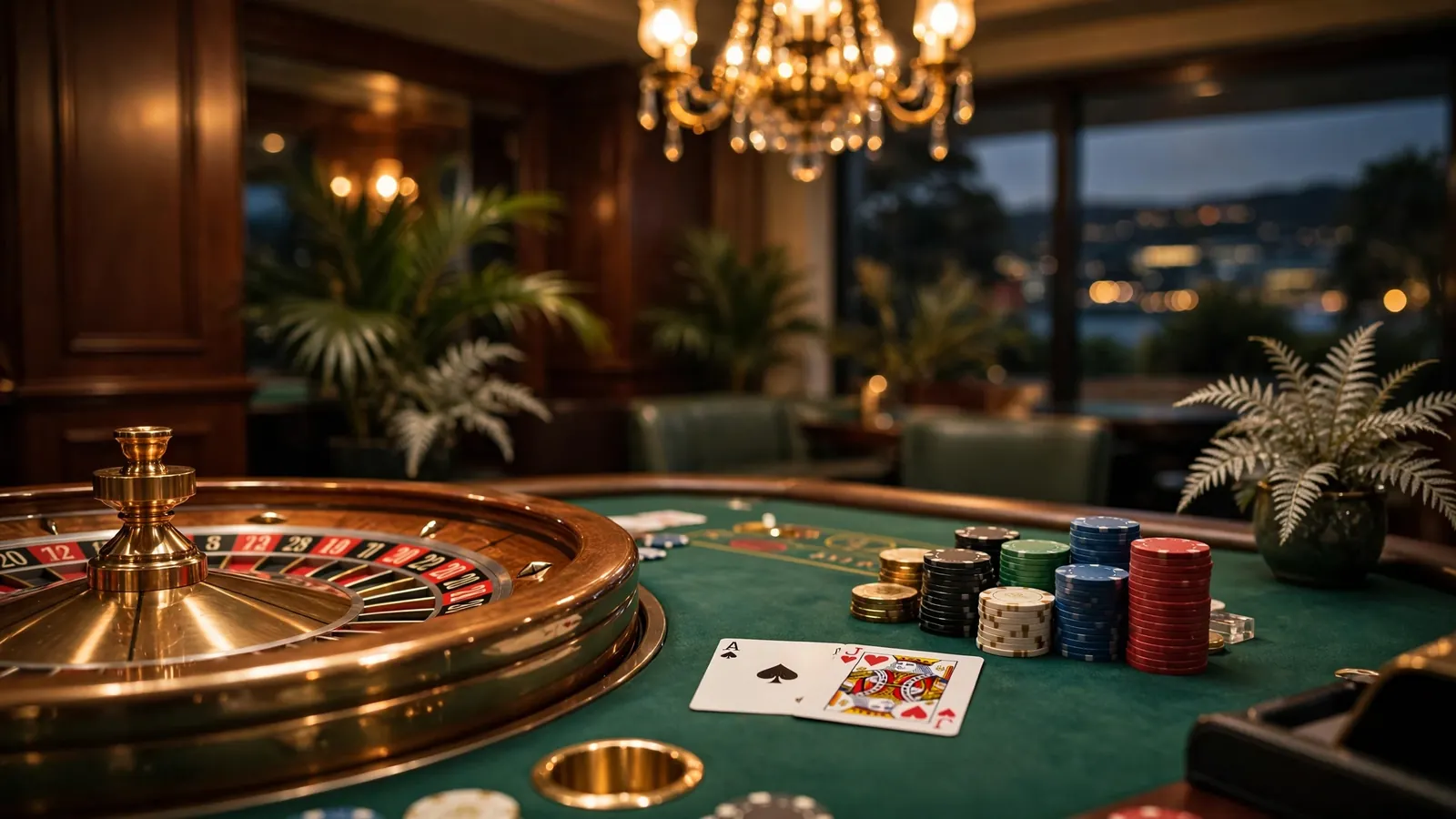
A natural blackjack means an ace and a 10-value card dealt as the initial two-card hand. It is distinct from reaching 21 with additional cards. Its payout is not uniform: a specialist review reports that some tables pay a natural blackjack at 3:2, while others pay 6:5. Check the payout printed in the rules for the particular game rather than treating either figure as a promise across live blackjack sites. The difference matters because it changes what a winning natural returns relative to the wager.
Pay attention to the wording as well as the headline payout. A table can state one blackjack return while setting a different dealer rule or allowing a different set of player choices. It is the combination that describes the game. If the rules are not clear before you begin, do not fill the gaps with assumptions drawn from another table.
Side bets, where offered, are separate wagers with their own terms; they do not change the basic aim of the main hand. Read their rules independently rather than assuming the main blackjack payout explains them. The same care applies when a table presents familiar actions such as splitting or doubling: availability and conditions can depend on the game. For a single hand, knowing the card values is only the starting point. The useful check is whether you understand the choices available, what the dealer must do, and how a natural blackjack is paid before you commit to a decision.
Check Before Betting
- Verify the dealer’s rule for soft 17
- Confirm the number of decks in use
- Check if surrender is available
- Identify the natural blackjack payout ratio
What New Zealand’s 2026 Online Casino Changes Mean for Players
New Zealand’s online casino rules are moving from a system with no domestic licensing of offshore services to a licensing framework established by the Online Casino Gambling Act 2026. The Act took effect on 1 May 2026. For someone considering live blackjack in New Zealand in 2026, that date matters because the change is being introduced in stages rather than through an immediate switch to a fully operating licensed market.
Before the new law, online casinos based outside New Zealand were not licensed or supervised by a New Zealand regulator. A customer using an offshore website during that period had no domestic government recourse if a dispute arose. The Gambling Act 2003 also did not permit online casinos to be based in New Zealand. The 2026 Act establishes the country’s first domestic licensing system for online casino gambling, changing the framework for providers rather than making online casino gambling a local, unrestricted business.
Who oversees the framework?
The Department of Internal Affairs is New Zealand’s primary gambling regulator and oversees the online casino licensing framework. The Gambling Commission has a separate decision-making role: it hears and determines licence applications, issues online casino licences and approves changes to licence conditions.
That division matters because “the regulator” is not a single office doing every part of the process. The Department oversees the framework, while the Commission handles applications and licensing decisions. The existence of a new application process does not, on its own, mean that every online casino available to New Zealand customers already holds a domestic licence.
The transition provisions are central to the 2026 position. Providers that were already offering services to people in New Zealand before 1 May 2026 may continue operating during the transition, which runs until 1 December 2026. This temporary permission is not the same as a final licence. It gives qualifying existing providers a period in which to seek entry to the new regime, subject to the Act’s transitional rules.
What happens if a provider does not apply?
A provider that was operating in New Zealand before the new law took effect but does not apply for a licence must stop conducting online casino gambling in the country by 1 December 2026. The same end date marks the close of the transitional window. Providers that were not already serving New Zealand customers before 1 May 2026 do not fall within the stated permission for existing services to continue.
An application is not a guarantee of approval. If the Gambling Commission declines a provider’s application, that provider must end all online casino gambling operations in New Zealand and leave the market. In other words, continuing through the transition does not confer a permanent right to operate; the outcome of the licensing process matters.
The Act also sets a future enforcement context. Unlicensed operation is expected to become an offence from around mid-2027, and providers operating without a licence may face enforcement action and fines of up to NZ$5 million. Those consequences concern providers, not a claim that a customer is liable simply for playing at an offshore casino. The change is directed at who may offer online casino services in New Zealand and under what authorisation.
What does this mean during 2026?
The transition means that the market may not yet resemble the completed licensing system. The full licensed online casino regime is not expected to be fully operational until 2027. Until then, the Act’s transitional provisions determine which existing services may continue and when providers must stop if they do not apply or are refused.
Unlicensed Operation
Providers operating without a licence may face enforcement action and fines of up to NZ$5 million starting around mid-2027.
There is also a restriction on promotion: operators are prohibited from advertising online casino gambling services to people in New Zealand during the transition period. Once licensed, operators may advertise only under tight rules, and sponsorships are prohibited. These limits are distinct from the question of whether an existing provider may temporarily continue operating under the transition provisions.
For a player looking at live casino blackjack, the practical point is to distinguish temporary operation from domestic licensing. A service being accessible during the transition does not establish that it has received a New Zealand licence. The legal framework is changing, but the licensing system is not expected to be fully in place until 2027. The dates and application outcome therefore shape the provider’s position; they do not turn the transition itself into a blanket endorsement of every site a customer may encounter.
Live-Dealer Blackjack Compared with Software-Deal Blackjack
The main difference between live-dealer blackjack and software-deal blackjack is what produces the cards. At a live table, a dealer handles actual cards and the game is streamed to you. In a software game, a random number generator (RNG) uses software shuffles to determine the cards. Both formats present blackjack, but they do not create the same playing experience.
A live table is closer to sitting at a casino table: you watch a dealer handle the cards rather than seeing the game generated entirely by software. The stream gives you a view of the table as the hand unfolds. That can matter if you prefer to follow a dealer’s actions as they happen. It does not remove the practical differences of playing remotely, however. The stream can introduce delays, and some live games may require higher bets.
RNG blackjack dispenses with the streamed dealer and physical table. The cards are determined through software shuffles, and the game generally moves faster than a live-dealer game. There is no need to wait for the streamed action to progress before the next part of play can happen. If pace is your priority, that is the clearest difference between the formats.
Pace and interaction
The faster pace of RNG blackjack can make it easier to move through hands quickly. That speed is a feature of the format, not evidence that one kind of game is more favourable than the other. A live stream takes time to show the action; a software game can proceed without that same viewing delay. Your choice is partly about whether you value a quicker sequence of hands or the experience of watching actual cards being dealt.
Live blackjack can feel more like a table game because it uses a dealer and physical cards. But a streamed view is not the same as being present at the table. You are watching remotely, and the delay in the stream may affect how quickly the game moves. A higher required bet can also make a particular live table less suitable for your intended stake. Those are practical trade-offs to consider, not details that can be resolved by the format label alone.
Uses a streamed view of a dealer handling physical cards; may include streaming delays and higher minimum bets.
Uses a random number generator (RNG) for shuffles; offers a faster pace without viewing delays.
Software-deal blackjack is not a live table with the dealer removed from the picture. Its shuffle is handled by software, which allows faster play than the live stream. That distinction is useful when comparing games: the pace and presentation differ, even though both are blackjack. Choosing between them does not require assuming that one is automatically more realistic, safer or better value.
What to compare before choosing
For live blackjack in New Zealand, decide first whether you want actual cards and a streamed dealer, or a faster game driven by software shuffles. Then check the practical terms displayed for the particular table, including whether it requires a higher bet. A general description of the format cannot tell you what a specific table requires.
It is also worth separating the appeal of watching real cards from expectations about speed. Live play offers a casino-table-like view, but the stream can slow the experience. RNG play moves faster, but the cards are generated through software rather than dealt at a streamed table. Neither description needs embellishment: they are different ways to deliver the same broad game.
If you mainly want a brisk sequence of hands, software-deal blackjack may fit that preference better. If seeing an actual dealer handle cards is important to you, live blackjack may be the more appealing format, provided you are comfortable with possible streaming delays and any higher bet requirement. Consider those differences before joining; the name of the format alone does not settle which experience suits you.
What Free Play Can—and Cannot—Tell You About Live Blackjack
Free online blackjack can give you a low-pressure way to get used to the rhythm of a hand and practise making decisions. You can focus on whether to take another card or stop, and learn how choices such as doubling down or splitting fit into play. That familiarity may make the sequence of decisions feel less new when you later watch a live table.
But a free game is useful only for what it actually reproduces. Many free blackjack games are software-shuffled RNG games: the cards are generated and shuffled by software, and play generally moves faster than at a live-dealer table. A streamed table uses actual cards. It has a dealer handling the game and a pace shaped by the live process, so a software demo cannot reproduce every part of that experience.
The distinction matters if your aim is to play live blackjack without staking money. A free RNG game can help you practise decisions, but it is not automatically a free version of a live table. Check what kind of game you are opening rather than relying on a “free” label. If it is a software game, treat it as practice against that format, not as a preview of a streamed session.
Free play also cannot tell you how you will respond when the setting changes. Decisions made without money at stake may feel different from decisions made during real-money play. Nor does practice establish that you will win: getting comfortable with the interface or with common choices is not a reliable way to earn.
- Use free play to learn the order of play
- Identify where decisions appear
- See how the game responds to choices
- Assume free RNG play mirrors live dealer pace
- Expect free play to guarantee future wins
- Infer free access to one format means the other is free
A sensible use of free play is narrow. Use it to become familiar with the order of play, notice where decisions appear and see how the game responds to your choices. If you want to prepare for a live-dealer table, look for a free option that is explicitly streamed with a dealer; where that is unavailable, be clear that software practice is not the same experience. Do not infer that free access to one format means the other is also available without a stake.
In short, free blackjack can help you rehearse decisions, but the label alone says little about the game behind it. Software-shuffled play offers a faster practice environment; live dealing involves actual cards and a stream. Knowing which one you are using helps keep expectations realistic.
Playing Live Blackjack Online: Check the Rules Before You Join
Before you take a seat at an online live blackjack table, read its rules rather than assuming every version works the same way. A familiar layout can conceal differences that affect both your decisions and the house edge: the rules determine what the dealer does, which options you have and how a winning hand is paid.
Start with the dealer’s rule for a soft 17. A soft hand contains an ace counted as 11 without taking the total above 21; a soft 17 is an ace with a six. Some tables require the dealer to hit that hand, while others require the dealer to stand. That distinction can change the situations you face, so a strategy based on one table may not fit another.
Check how many decks are used, too. The deck count is part of a table’s conditions, not a detail to overlook because the game is streamed. It can affect the probabilities behind decisions, which is one reason two tables with the same name may not offer identical play.
Surrender is another rule to confirm. Where it is allowed, it gives you an option to give up a hand under the table’s conditions rather than continue playing it. If the option is unavailable, you cannot make that choice. Do not assume a strategy that uses surrender applies at every table.
Then inspect the natural-blackjack payout. A natural is an ace and a ten-value card dealt as the opening hand. The payout can differ between tables, and that difference matters when comparing the terms of a game. A table that looks otherwise familiar can still produce a different overall cost to the player because of its payout and other rules.
These details work together. A single rule does not tell you everything about a table’s house edge, and a label such as “live blackjack” is not a complete description of its conditions. Blackjack variants differ in ways that can affect strategy and the house edge. A decision that makes sense under one set of rules may be less suitable under another, so treat strategy advice as conditional rather than universal.
Use the table information before joining, and look for the rules displayed in the game or its help panel. If a key condition is unclear, do not fill the gap with an assumption. You can compare tables by checking the same points each time: deck count, the dealer’s soft-17 rule, surrender availability and the natural-blackjack payout. That makes the comparison more useful than relying on a table’s name or appearance.
Table Comparison Essentials
- Check the dealer’s soft-17 rule as it affects strategy
- Verify deck count to understand probabilities
- Confirm surrender availability and natural blackjack payouts
- Avoid assumptions based on a table’s name or appearance
Searching for the best live blackjack online can suggest that one table is best for everyone. In practice, the rules and the decisions you are comfortable making matter more than a broad label. Choose only after you understand the conditions in front of you; the stream may look familiar, but the rules are what shape the hand.
Using a Phone for Live Blackjack: Expect Streaming Delays
A phone can make a live blackjack table easier to access when you are away from a larger screen, but it does not remove the limits of a streamed game. Live dealers handle physical cards, and the video feed may arrive with a delay. What you see on screen may therefore not feel as immediate as watching a table in person.
That matters when you are deciding whether a mobile live table suits you. A pause in the feed can make the hand feel slow or leave you waiting for the next stage. The delay is part of the streaming experience, not a change to the cards or a sign that you can speed up the dealer. If you prefer a quick, continuous pace, a live table on a phone may frustrate rather than help.
Screen size is another practical consideration, though it does not alter the rules. You need to be able to follow the dealer and the table clearly enough to understand what is happening before you act. If the display feels cramped or the stream is difficult to follow, convenience is of limited use. A larger screen may be more comfortable for some players, but it does not make the live feed instantaneous.
Table access can also come with a higher betting requirement than you expected. Live streaming may require higher bets, so check the table information before joining rather than assuming a phone-friendly option will also suit your intended stake. The video format and the cost of entry are separate considerations.
When weighing up mobile live blackjack options, focus on whether the stream is clear and whether its pace works for you; no app can remove a delay inherent in streaming. Avoid treating a delayed image as a real-time view of every moment at the table. Give the feed time to catch up, and do not make a decision based on an unclear or apparently frozen screen.
A phone can be a practical way to watch a live dealer, but it is not automatically the best way for every player. The useful test is whether you can follow the table comfortably and accept that the stream may pause or lag. If you need immediate play, that limitation is worth considering before you join.
Bitcoin Deposits and Live Blackjack Bonuses: Read the Conditions
If you are considering using Bitcoin to fund a live blackjack session, first check whether the payment method is actually available with the service you are considering. A search for Bitcoin deposits does not establish that a particular casino accepts them, or that a deposit made this way qualifies for a promotion. Payment options and bonus terms need to be confirmed in the relevant cashier information and offer conditions.
A live blackjack bonus can sound straightforward while carrying rules that change its practical value. Read the full terms before depositing or opting in, and look for how blackjack contributes towards wagering requirements. The contribution may differ from that of other games, so a bonus balance can take longer to clear than its headline suggests. If the terms do not clearly explain how live blackjack is treated, do not assume it counts in full.
Attention Placing a bet above the maximum-bet limit during wagering may affect your eligibility for a bonus or any resulting winnings.
Check the maximum-bet rule during wagering, too. Placing a bet above the stated limit may affect eligibility for the bonus or any resulting winnings. The limit is a promotion condition, not a blackjack table rule: the table determines how a hand is played, while bonus terms govern what you can do while meeting the offer’s wagering requirements.
Also establish whether a promotion must be claimed, which deposit method qualifies, and whether the offer has an expiry condition. Do not rely on a banner or a short summary when the full terms contain the controlling details. If Bitcoin is listed as a payment method but excluded from a promotion, the deposit and the bonus may be treated separately.
Keep the payment decision distinct from the game decision. A bonus does not alter the cards, the dealer’s actions or the table’s rules, and it should not be treated as a reason to deposit more than you intended. Before playing, make sure you understand how the payment is recorded, what conditions attach to the offer and what happens if you do not meet them.
If any wording is unclear, ask the service to explain it before accepting the promotion and keep a copy of the terms you relied on. That makes it easier to check what was promised if a dispute arises. The useful comparison is not simply whether a live blackjack offer exists, but whether its payment and wagering conditions suit the way you plan to play.
How a Live Blackjack Hand Works, Including 3:2 Payouts
Live blackjack is a contest between you and the dealer, not a competition among the players at the table. Your aim is to finish with a hand closer to 21 than the dealer’s, without going over 21. You make decisions on your own hand; the dealer’s hand is the one you are trying to beat.
Number cards count at face value, while jacks, queens and kings are worth 10. An ace can count as either 1 or 11, depending on which value helps the hand without taking it over 21. A hand with an ace counted as 11 is often called a soft hand; that flexibility can matter when deciding whether to take another card.
The available choices depend on the table, but they can include hitting, standing, doubling down, splitting and surrendering. To hit is to ask for another card. To stand is to keep the total you have. Doubling down means increasing your bet in exchange for a restricted further play, while splitting lets you play a pair as separate hands. Surrender, where offered, lets you give up the hand under the table’s conditions. The labels are simple; the table rules determine what each choice permits.
A natural blackjack is an opening hand made from an ace and a card worth 10. Its payout is separate from the basic aim of beating the dealer, so check the payout before you join. A specialist review of blackjack tables describes a 3:2 payout for a natural blackjack, while noting that some tables pay 6:5 instead. Those figures are payout ratios, not a promise that every live table uses one particular rate. The difference affects what a winning natural blackjack returns, so the table’s displayed rules matter.
Payout Variations
A specialist review reports that while some tables pay a natural blackjack at 3:2, others pay 6:5.
In practice, the hand is a sequence of choices: assess your total, decide whether to take another card or stop, and use any other option only if the table allows it. You do not need to memorise every variation to understand the objective, but you do need to know the rules attached to the table you have joined. A familiar game can still have a less familiar payout.
Before You Gamble on Live Blackjack, Set Your Limits
Live blackjack is gambling, not a dependable way to earn money. The aim is to finish closer to 21 than the dealer without going over, but making decisions during a hand does not remove the uncertainty of the outcome. A run of wins is not a reliable income plan, and a run of losses is not a reason to keep playing.
Before you join a table, decide how much money you can afford to lose. Treat that amount as the cost of entertainment, not as money that should come back. Keep it separate from funds needed for rent, bills, food, debt payments or other essentials. If losing the budget would cause difficulty, it is too large for gambling.
Set a stopping point before the session begins, and stick to it whether you are ahead or behind. Chasing losses—continuing in an attempt to recover money already lost—can turn a limited session into a more serious financial problem. Raising stakes because you feel due a win does not make the next hand more likely to favour you.
It can also help to decide in advance how long you intend to play and to take a break if frustration, excitement or fatigue starts affecting your judgment. Do not rely on a table choice or a betting system to make gambling predictable. No live blackjack option can promise a profit.

If you find yourself repeatedly exceeding the budget you set, hiding your gambling or struggling to stop, pause rather than depositing more. A clear limit is useful only if you are willing to leave the table when you reach it.
Card Counting at Live and Online Blackjack Tables
Card counting is a way of keeping a running mental tally of cards that have appeared, with the aim of judging how the remaining cards may affect decisions. It is not a guarantee of winning, and knowing that a count can be made does not make every blackjack format suitable for it.
In New Zealand, using mental calculation to count cards is not illegal. That legal point is narrow: it does not establish that counting will produce an advantage, or that a particular table’s rules make it useful. Treat it as a method of tracking information, not a betting system that can reliably turn a session profitable.
The difference between live and online play matters. A live-dealer game uses physical cards, so cards dealt during play can be observed. Even then, a running count is only an estimate based on what has appeared; it does not reveal the next card or remove the uncertainty of the deal.
Online RNG blackjack works differently. RNG means random number generator: software determines the shuffle and card sequence. Because the game shuffles through software, a count based on cards previously shown should not be treated as a dependable guide to what comes next. Faster play does not make the count more informative; it simply means hands can move on more quickly.
If you are considering card counting at live or online blackjack, separate three questions: whether the method is legal, whether the game’s format gives the count any practical relevance, and whether you are comfortable with the risk of losing. A legal activity is not automatically effective, and a mental tally cannot make gambling predictable. Keep your spending within a budget and do not increase bets to recover losses.
Created by the ”Casino Expert NZ” editorial team.