Bitcoin Slots in New Zealand: Games and Payments
 Available in US
Bitcoin is a payment method, not a feature of the reels; the guide also covers offers, cash-outs, verification and changes in value.

Table of Contents
- Bitcoin Slot Machines: The Game and the Payment Are Separate
- What New Zealand’s 2026 Online Casino Rules Mean for Bitcoin Slots
- Free Spins and No-Deposit Offers: Check the Conditions
- How to Judge Bitcoin Slot Claims Without a ‘Best’ List
- Depositing and Withdrawing Bitcoin: A Practical Walkthrough
- Bitcoin Slot Balances Can Change in Value
- Bitcoin Cash Slot Games and the Value of Winnings
- Bitcoin Slot Bonuses: What the Available Evidence Does—and Does Not—Show
- Playing Online: Wallet Security, Fees and Verification
- Bitcoin Video Slots: What Can Be Confirmed
Bitcoin Slot Machines: The Game and the Payment Are Separate
A “Bitcoin slot machine” is not a different kind of machine from a conventional slot game. The phrase joins two separate things: the game you play and the cryptocurrency that may be used with an online casino account. The game is the pokies experience; Bitcoin is a way of representing and moving value. It does not turn the reels, determine the symbols or change the rules of a particular game.
That distinction matters because labels can make a payment method sound like a game feature. A Bitcoin casino slot machine is still a slot game offered through an online casino. The word “Bitcoin” describes the account or payment context, not necessarily anything inside the game. A game does not become a Bitcoin game simply because the casino accepts Bitcoin.
In a typical slot-style game, you make a stake and the game produces an outcome according to its rules. The screen may show reels, symbols, animations and a balance, but those visual elements are part of the game interface. Bitcoin belongs to a different layer: the casino account and the movement of funds into or out of it. Calling something a “BTC slot machine” does not, by itself, tell you how its game mechanics work.
Choosing a Bitcoin slots site in New Zealand means weighing the details that are available about each operator. Use these verdicts as a concise reference when deciding which options to look into further.
Payout speed: 1-3 business days Wintino lists a payout speed of 1–3 business days, giving you a stated timeframe to consider.
License: Curaçao Gaming Authority, licence no. OGL/2024/165/0185 BitStarz lists a Curaçao Gaming Authority licence, number OGL/2024/165/0185. You can use this licensing detail as one point of reference.
License: 07017519840 · Payout speed: 1-3 business days Zotabet lists licence number 07017519840 and a payout speed of 1–3 business days. These details give you two concrete points to review.
License: Tobique Gaming Commission, licence no. 0000091 7Bit Casino lists a Tobique Gaming Commission licence, number 0000091. You can consider this licensing information as part of your review.
License: Tobique Gaming Commission, licence no. 0000002 Ricky Casino lists a Tobique Gaming Commission licence, number 0000002. This gives you a specific licensing detail to check.
License: Malta Gaming Authority, licence no. MGA/B2C/370/2017 Play Grand lists a Malta Gaming Authority licence, number MGA/B2C/370/2017. You can take this information into account when reviewing the operator.
License: Tobique Gaming Commission, licence no. 0000064 Neospin lists a Tobique Gaming Commission licence, number 0000064. You can use the stated licence as a point of reference.
License: Malta Gaming Authority, licence no. MGA/B2C/394/2017 N1 Casino lists a Malta Gaming Authority licence, number MGA/B2C/394/2017. This provides you with a specific licensing detail to consider.
Payout speed: 1-3 business days Lamabet lists a payout speed of 1–3 business days, giving you a stated timeframe to review.
It is useful to separate three labels that may appear close together:
- The game: the particular slot title and its rules.
- The account balance: the value the casino records for you.
- The payment method: Bitcoin, if the casino supports it for account funding or withdrawals.
These labels answer different questions. The game label identifies what you are playing. The balance shows what the account records. The payment label indicates how value may be transferred. Treating them as interchangeable can lead to mistaken assumptions—for instance, that a game has special Bitcoin mechanics when Bitcoin is only relevant to the account.
The phrase “Bitcoin slot machine games” can therefore mean slot games played at a casino account associated with Bitcoin. It does not identify a single category of game with shared rules. Two games offered through the same account can have different themes and mechanics, while the use of the same cryptocurrency does not make those games alike. Conversely, the same game could be offered in an account context that does not use Bitcoin. The payment method and the game’s design are not the same feature.
Nor does “online Bitcoin slot machine” mean that a physical machine is connected to a Bitcoin network. In this context, “machine” is a familiar name for the game format, not a description of hardware in your home. You access the game online, while Bitcoin—where supported—relates to the casino’s financial account functions. The familiar wording can blur that line, but the two parts remain distinct.
The same applies to wording such as “pay Bitcoin slots casino.” It points towards a casino account where Bitcoin may be used, not a special way of playing the slots. A game’s rules are found in its own information, not inferred from the payment label. The Bitcoin label alone does not establish what features a game has, how its outcomes are generated or what a win would mean for the account balance.
If you see a slot described as a Bitcoin slot, read the phrase as shorthand rather than as a technical description of the game. Ask what the label actually refers to: the title, the account currency, or the payment method. If it refers only to Bitcoin payments, the game itself may have no Bitcoin-specific feature at all. The distinction is simple, even if the marketing language is not.
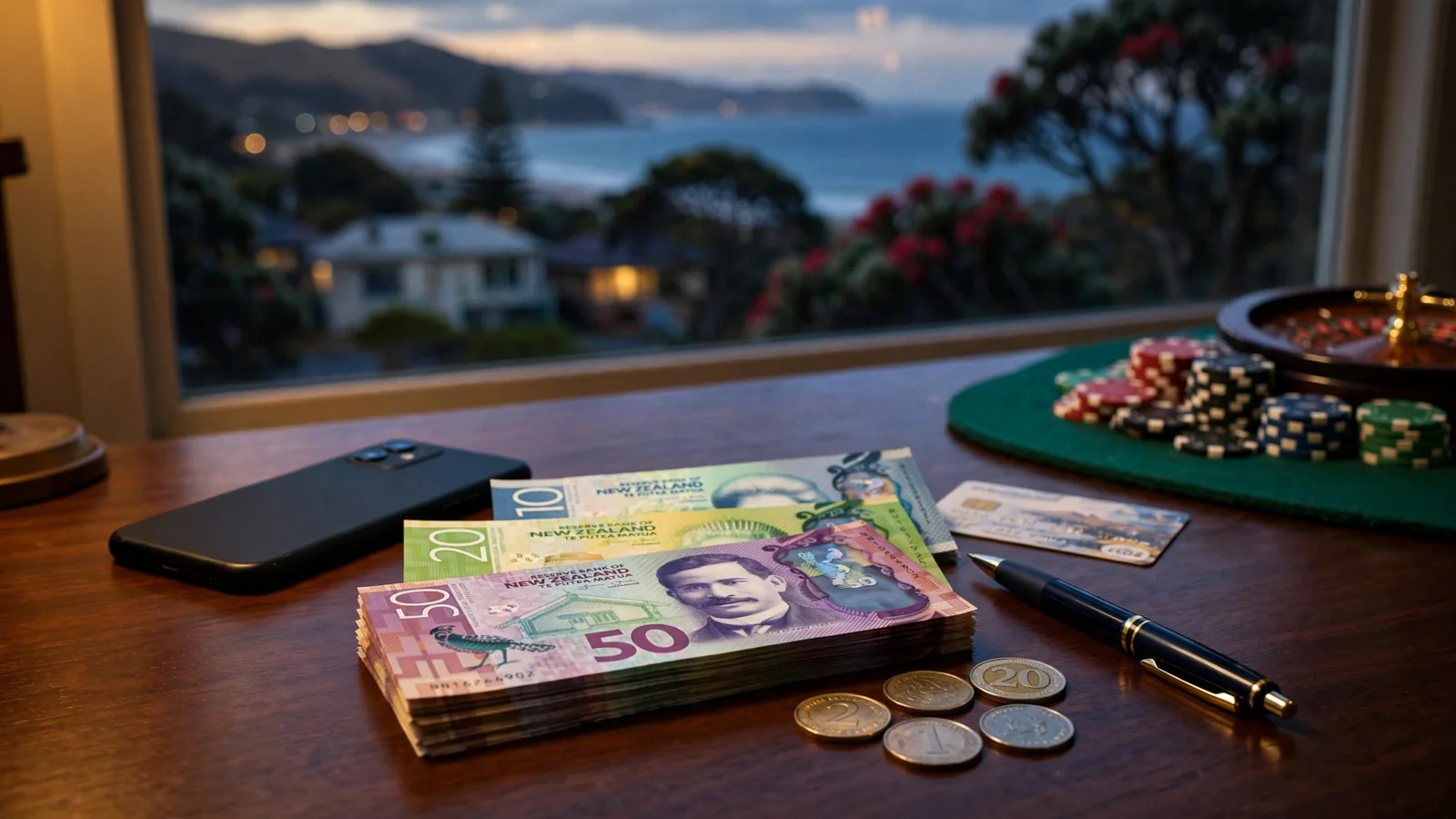
This also helps make sense of “Bitcoin slots” as a general category. It usually describes the setting in which a slot game is offered, rather than a defined family of games. The wording does not tell you whether the game displays a balance in Bitcoin, whether its stakes are set in Bitcoin, or whether the casino handles the account in another currency while accepting Bitcoin separately. Those are account and payment details, not properties that can safely be inferred from the game’s name.
So, when a casino presents online pokies alongside Bitcoin, keep the two descriptions in their proper places. The slot is the entertainment product; Bitcoin is a cryptocurrency that may be used to fund an account or receive a withdrawal. One describes what you play, the other concerns how value moves. The phrase “Bitcoin slot machine” makes sense once that distinction is kept clear.
What New Zealand’s 2026 Online Casino Rules Mean for Bitcoin Slots
For Kiwis considering online casino games funded with Bitcoin, the key regulatory change concerns the companies offering the gambling service, not the cryptocurrency used to pay.
There is a real disagreement over the dates in published accounts. A specialist review says the Online Casino Gambling Bill 2026 cleared its third reading on 23 April 2026 and is due to take effect on 1 December 2026. Other legal-status information says the Online Casino Gambling Act 2026 came into force on 1 May 2026. Those statements cannot both describe the Act’s commencement in the same way. The latter account also describes a transition from 1 May to 1 December 2026, during which online casinos already serving New Zealand customers before 1 May may continue operating. The full licensing system is not expected to be operational until 2027.

The practical distinction is between commencement of the law and the staged introduction of its licensing rules. Under the stated transition, existing offshore operators may continue temporarily, while new offshore operators have been barred from entering the New Zealand market since 1 May 2026. The transition ends on 1 December 2026. A specialist review says operators wishing to legally offer online casino gambling to people in New Zealand will need a licence under the Act from that date. This does not mean every offshore casino has a New Zealand licence, or that the licensing system is already fully operational.
The framework establishes New Zealand’s first domestic licensing regime for online casino gambling. A specialist review describes the regime as capped at 15 licences and administered by the Department of Internal Affairs. Those details concern the supply of gambling services: they are not a licence held by a player, nor do they establish that an international Bitcoin casino is regulated here. Offshore crypto casinos do not have domestic New Zealand regulatory oversight or the consumer protections that such oversight would provide. During the transition, advertising online casino gambling to people in New Zealand is prohibited.
For players, the position is different. The law targets operators, and there is no law that makes it illegal for an individual Kiwi to visit and play at an offshore site. Individuals are also not currently prohibited from using cryptocurrency at offshore online casinos. That is not the same as saying an offshore operator is licensed locally or that a player has domestic government recourse if something goes wrong. Before the new Act, offshore online gambling was not licensed or supervised by a New Zealand regulator, leaving customers without domestic government recourse.
The distinction matters when you see a site described as a Bitcoin slots casino for New Zealand customers. The phrase may describe games offered by an offshore business, but it does not prove that the business holds a New Zealand licence. Nor does the arrival of the new law make every existing offshore service part of the domestic regime. Only providers already operating here before 1 May 2026 may continue during the transition, subject to its provisions, and that permission ends on 1 December.
Regulatory Risk
Offshore crypto casinos do not have domestic New Zealand regulatory oversight or the consumer protections that such oversight would provide.
So, in 2026, the regulatory picture depends on the date and on whether the question is about the operator or the player. The transition permits some existing services to continue for a limited period; the licensing framework is being introduced in stages. For an individual, using Bitcoin at an offshore casino is not itself prohibited under the stated rules, but that does not confer local oversight or protection on the casino.
Free Spins and No-Deposit Offers: Check the Conditions
A free-spin promotion can sound straightforward: you receive spins without paying for each one. A no-deposit offer suggests that no initial deposit is needed to take part. Neither label, by itself, tells you whether an offer is available to you, what it costs in practice, or whether winnings can be withdrawn.
That distinction matters when a promotion is described as a Bitcoin free spin. The wording may refer to spins offered by a casino that accepts Bitcoin; it does not establish that the spins are paid for in Bitcoin or that any resulting balance can be cashed out in cryptocurrency. Treat the advertised label as a starting point, not a complete description.
Before acting on an offer, find its full terms and check:
- Who can take part: Look for eligibility rules, including any country or account restrictions. Do not assume that an offer shown on a page applies to every visitor.
- What counts as a qualifying action: Check whether registration alone is enough, or whether the terms require another step. “No deposit” should not be taken to mean “no conditions.”
- Which games are included: A promotion may apply only to named games or exclude some titles. Confirm that the spins can be used on the game you intend to play.
- How winnings are treated: Find out whether winnings become withdrawable funds, remain subject to conditions, or are limited in another way. A displayed win is not necessarily the same as money you can withdraw.
- When the offer expires: Check any start, end or use-by conditions stated in the promotion. If the terms are unclear, do not assume the offer will remain available.
- Whether the offer can be claimed once or more than once: The terms should make clear how participation is counted and whether previous use affects eligibility.
These are points to verify, not claims that every promotion contains such restrictions. An offer may use different rules, and its own wording is what matters. If the terms are absent, contradictory or difficult to understand, you cannot reliably judge the value of the spins from the headline alone.
Be especially careful with pages that promise free Bitcoin spins or spins with no deposit but provide no accessible conditions. A promotional phrase is not evidence that the offer is active, that it is open to people in New Zealand, or that it will produce withdrawable funds. Do not register or share personal information on the assumption that a search result or banner settles those questions.
“Free” also describes only the advertised entry point. It does not answer whether you must meet other conditions before you can keep or withdraw winnings. Read the terms before accepting an offer, and keep a copy of the wording you relied on. If the site’s explanation does not clearly answer the points above, treat the promotion as uncertain rather than filling in the gaps yourself.
Verify Promotion Terms
- Check eligibility rules for your country or account
- Confirm if registration alone is enough or if other actions are required
- Verify which specific games are included in the offer
- Determine how winnings are treated and if they are withdrawable
- Check the expiration date of the promotion
- Confirm if the offer can be claimed more than once
The same care applies when an offer is promoted as a way to play Bitcoin slots for real money. The phrase may combine a free-spin claim with a payment method, but it does not establish how the promotion works or what happens to a win. Check the offer’s actual conditions before deciding whether it is worth your time.
How to Judge Bitcoin Slot Claims Without a ‘Best’ List
A ranking of Bitcoin pokies is only useful if it compares like with like. A page calling certain games the “best” should explain what that means: perhaps it compares features, play experience or another stated measure. Without a clear basis and evidence that supports the comparison, the label is a verdict, not a finding.
Treat bonus rankings with the same care. A “best Bitcoin slots bonus” claim does not tell you whether the offers being compared are current, who can use them or what conditions apply. Those details matter more than the headline. A page that offers a ranking but does not make its comparison method clear gives you little reason to trust the order.
Separate what a page demonstrates from what it merely asserts. A confident tone, prominent placement or repeated use of words such as “top” and “best” does not establish that one game or offer is better than another. Look for a clear explanation of the criteria, and check whether the claims are specific enough to assess. If the reasoning is missing, the ranking cannot do much of the work it promises.

The same caution applies when a page uses “BTC slots” as shorthand. Bitcoin may be part of the description, but that label alone does not tell you which games are included or what makes them distinct. Nor does the phrase “Bitcoin slots faucet” establish that a free balance or game access is available. Read the actual explanation rather than treating a familiar-sounding label as proof.
A specialist review has described balances held in a volatile coin as capable of gaining or losing value. That is a reason to distinguish a promotional claim from a dependable comparison: an advertised amount does not, by itself, establish what it will be worth later. The separate mechanics of sending and receiving cryptocurrency are another matter; a list of games does not explain them.
A practical way to read a ranking is to ask:
- Does it say what “best” means, and apply that standard consistently?
- Does it explain how the games or offers were compared?
- Are factual statements separated from promotional language?
- Can you tell what the claim actually covers, rather than relying on a broad label?
If those answers are unclear, do not fill in the gaps yourself. A list can still help you identify subjects to investigate, but it should not be treated as independent proof of quality or value. Where no supported comparison is presented, the honest conclusion is that the ranking has not shown why its choices deserve their place.
Depositing and Withdrawing Bitcoin: A Practical Walkthrough
A Bitcoin payment has two separate stages: sending the transaction and having it credited to your casino balance. A withdrawal reverses the direction, but adds an approval step on the casino’s side. Knowing where each stage stands can help you distinguish a pending transaction from one that needs attention.
Sending a deposit
Start in the casino account’s cashier or deposit area and select Bitcoin. The site should display a Bitcoin address, and may also provide a QR code. Copy the address from the deposit instructions rather than typing it yourself. Before sending, check that the selected cryptocurrency and blockchain network match those instructions exactly. A mismatch can send funds somewhere they cannot be recovered.
Sending a Deposit
Go to the casino cashier, select Bitcoin, and copy the provided Bitcoin address or QR code.
Paste the address into your personal crypto wallet, enter the amount, and confirm the transaction.
Wait for the transaction to receive blockchain confirmations, typically taking 10 to 30 minutes, before the balance is credited.
Send Bitcoin from a personal wallet, not directly from a crypto exchange. In your wallet, paste the casino address, enter the amount you intend to send, and review the details before confirming. If the casino displays a reference or other payment instruction, follow it as shown.
After you confirm the transfer, it is broadcast to the Bitcoin network. The casino does not credit the deposit merely because you pressed send; the transaction must receive blockchain confirmations first. A specialist review estimates that Bitcoin deposits may appear after one to three confirmations, with the wait taking roughly 10 to 30 minutes. That is an estimate, not a guaranteed arrival time: network conditions and the casino’s own crediting process can affect what you see.
Keep the transaction record in your wallet. If the deposit has not appeared, check whether the transaction is confirmed and compare its destination address with the one provided by the casino. If it is confirmed but the balance is still unchanged, contact the casino through its official support channel and provide the transaction details it requests. Avoid sending a second payment just because the first one is taking longer than expected.
Requesting a withdrawal
To withdraw, open the cashier or withdrawal area and select Bitcoin if it is offered. Enter your own wallet address carefully, then enter the amount and submit the request. Check the address and network again before confirming. A withdrawal sent to a wrong address may not be recoverable.

The request is not the same as a completed payment. The casino must approve it before sending Bitcoin to your wallet. A specialist review puts processing at some leading crypto casinos at five to 30 minutes after approval, but that estimate does not include the time the casino takes to review the request. Once the casino sends the funds, the blockchain must confirm the transaction before your wallet reflects it.
Check the withdrawal status in your account, and look for a transaction reference once the payment has been sent. If it remains pending, the delay may be at the approval stage; if it has been sent but has not arrived, the remaining wait may be for blockchain confirmation. Support can clarify which stage applies. Do not treat an estimated processing time as a promise: casino approval and blockchain settlement are distinct steps.
Bitcoin Slot Balances Can Change in Value
A balance held in Bitcoin has two values to keep separate: the amount of Bitcoin shown in the account and what that amount is worth in New Zealand dollars. The coin amount may stay unchanged while its market price moves. As a result, the NZD value you associate with a balance can be different when you deposit from what it is when you later consider withdrawing.
Market Volatility
A balance held in a volatile cryptocurrency can rise or fall in value based on market price, regardless of the number of coins in your account.
A specialist review notes that a balance held in a volatile cryptocurrency can rise or fall in value. That is a market-price risk, not a change to the number of coins in your account. If Bitcoin’s price falls, the same Bitcoin amount converts to less NZD; if it rises, it converts to more. Neither movement is caused by the outcome of a spin, and neither guarantees that a gambling balance will retain a particular cash value.
This distinction matters when you assess what a win represents. A displayed win may be recorded in Bitcoin, while you think about its value in NZD. The conversion depends on the Bitcoin price used at the relevant time. If the price changes between the deposit and a later conversion, the NZD figure changes too, even if the Bitcoin quantity does not. A balance screen alone may therefore tell you how much cryptocurrency is recorded, but not settle what that sum is worth in local currency at a later point.
It is useful to think in terms of two separate questions: how many coins are held, and what those coins are worth at the moment you value them. The first concerns the account’s denomination; the second is exposed to market movement. A Bitcoin amount can look stable while its purchasing value moves, or fluctuate in the opposite direction. Treating the two figures as interchangeable can make a balance seem more certain than it is.
This risk is separate from blockchain fees and transaction timing. A network fee affects how much cryptocurrency is spent on or received from a transfer, while confirmation and processing time affect when a transaction is completed. Bitcoin’s market price, by contrast, affects the NZD value of the coin amount. Fees can vary with network activity and the cryptocurrency used; they do not explain a change in Bitcoin’s market price. Likewise, a transfer taking longer does not itself establish whether the price will rise or fall.

For a Bitcoin slot balance, the practical point is not that one price direction is more likely. It is that the NZD value is not fixed merely because the account displays a fixed coin amount. If you compare a deposit with a later withdrawal, keep the coin quantity, any transaction costs and the conversion value distinct. That makes it easier to see whether a difference comes from the market, transfer costs or the amount actually credited, rather than treating every change as one undifferentiated balance movement.
Bitcoin Cash Slot Games and the Value of Winnings
A win shown in Bitcoin is not automatically a fixed amount in New Zealand dollars. The display may show a crypto-denominated balance, while the amount you could spend or convert depends on the exchange value at the time you assess it. So a result that looks unchanged in Bitcoin can represent a different NZ-dollar value later.
That distinction matters when you are weighing a Bitcoin slot game’s displayed prize against its practical value. The number on the screen is one measure; what that amount would be worth in New Zealand dollars is another. Do not assume the two remain aligned, or that a displayed balance can be converted or withdrawn in a particular way. Those details depend on the service and its terms.
The same care applies to the phrase “Bitcoin cash slots”. It can refer to online pokies played with a Bitcoin balance, rather than a promise that a game pays out cash directly. A game’s currency label does not, by itself, tell you how winnings are valued, whether conversion is offered, or what you would receive in NZD. Check the stated unit of account and any conversion information before treating a displayed win as spendable money.
For Kiwis, recreational gambling winnings, including winnings from crypto casinos, are generally not subject to income tax in New Zealand. That is a general tax position, not a guarantee about how every individual circumstance is treated. It also does not make a crypto-denominated win equivalent to a particular NZ-dollar sum: tax treatment and market value are separate questions.

If you are comparing a Bitcoin-denominated result with ordinary household spending, use the NZ-dollar value available to you at the relevant time, rather than relying on the original deposit value or a game screen alone. Keep a record of the amount and its value when you receive or convert it if you need to understand your own finances later. The practical point is simple: a win can be recorded in Bitcoin, but its purchasing value is understood in the currency you actually use.
Bitcoin Slot Bonuses: What the Available Evidence Does—and Does Not—Show
A welcome bonus is a promotion associated with opening an account; a no-deposit bonus is described as available without first making a deposit. Those labels tell you the broad type of offer, not what you will receive or whether you can withdraw any resulting balance. The wording is a starting point, not a substitute for the offer’s terms.
That distinction matters when an advertisement pairs a bonus with Bitcoin slots. The promotion may be described in crypto terms, but the headline alone does not establish whether the bonus is credited in Bitcoin, whether it applies to slot play, or what conditions attach to any winnings. Treat each of those as a separate point to confirm in the operator’s current written terms.
Before relying on a welcome offer, check who can claim it, what action is required, which games qualify, and whether a time limit or wagering condition applies. Wagering conditions specify how much qualifying play is required before winnings can be withdrawn. Also look for restrictions on the amount that can be withdrawn, the payment methods accepted for withdrawal, and what happens if you decline or cancel the promotion. These details can change the practical value of an offer substantially.
A no-deposit label deserves the same care. It does not, by itself, mean that an account can be opened without identity checks, that every player qualifies, or that any credited amount is immediately withdrawable. Read the complete terms before registering or claiming anything, and save a copy of the version shown to you. If the terms are unclear or conflict with the headline, ask the operator for clarification before you act.

Be cautious with claims that call a Bitcoin welcome bonus the best. “Best” has little meaning without a stated basis for comparison: a larger advertised figure may come with tighter conditions, while an offer described as no-deposit may still have restrictions.
The same applies to claims about a current bonus being available to Kiwis. A promotional page can be outdated, and a general description may not establish that the offer is open to you. Confirm availability and the full conditions directly before making a decision. If those details cannot be checked, do not count the promotion as part of the value of an account.
Playing Online: Wallet Security, Fees and Verification
If you use Bitcoin to fund online pokies, treat the wallet transfer as a separate security task from creating an account or placing a bet. Use a dedicated crypto wallet for gambling payments rather than mixing them with everyday funds. Secure the wallet and casino account with strong, unique passwords, and turn on two-factor authentication where available. Set a deposit limit before playing; it gives you a clear boundary that is harder to disregard in the moment.
Before sending funds, compare the casino’s deposit instructions with the details in your wallet. The Bitcoin address must match exactly, and the selected blockchain network must be the one specified for that payment. A correct address on the wrong network is not a harmless typo. Send from a personal wallet, not directly from a crypto exchange, and check the transaction details before confirming it.
Transaction fees are separate from the amount you intend to send. They vary with network activity and the cryptocurrency used, so review the fee shown in your wallet before approving a transfer. A fee can affect how much reaches the destination; do not assume the casino will cover it or that every network costs the same.

Crypto payments do not necessarily mean anonymous play. A specialist casino review notes that an operator may request identity documents when you make a first withdrawal, seek a larger cashout or prompt a security check. KYC, short for “Know Your Customer”, means verifying who you are; a casino may ask for government-issued identification and proof of address. Check the account terms and prepare for a possible review rather than assuming a Bitcoin deposit avoids it.
For Kiwis, there is an additional limit to bear in mind: offshore crypto casinos do not have domestic New Zealand regulatory oversight or consumer protections. If a payment or account dispute arises, you may not have the protections available through a locally supervised provider. Security settings reduce some risks, but they cannot replace that oversight.
Bitcoin Video Slots: What Can Be Confirmed
A video slot is presented on a screen, but that label alone tells you little about a particular game. It does not identify its title, developer, rules or return rate. Nor does the use of Bitcoin as a payment method establish anything about how the game produces its results.
Treat claims about fairness as claims that need evidence, not as a feature implied by a crypto label. “Provably fair” has a specific implication: that a player can check something about the game’s results. The phrase by itself does not show what is checked, how the check works or whether it applies to the slot you are considering.
Before relying on a fairness claim, look for information that names the game and explains the relevant test or verification process. A general statement about a casino or its crypto payments is not proof about every game it offers. If the explanation does not connect clearly to the specific slot, you have little basis for judging what the claim means.
The same care applies to descriptions such as “video slot” or “Bitcoin slot”. They can describe the game’s presentation or how an account is funded, but they do not, on their own, establish the quality or fairness of the game. Avoid treating technical-sounding labels as a substitute for details you can evaluate.
Are Bitcoin casino winnings taxable in New Zealand?
No. Recreational gambling winnings, including crypto casino winnings, are generally not subject to income tax in New Zealand.
Is it legal to play at offshore Bitcoin casinos in New Zealand?
Yes. New Zealand law does not prohibit individual players from using offshore sites, although operators wishing to legally offer online casino gambling to people in New Zealand will need a licence from 1 December 2026.
What games can you play at Bitcoin casinos?
You can play slot games, also known as pokies. Bitcoin describes a possible payment method, not a special type of game.
Is crypto gambling legal in New Zealand?
Yes, individuals in New Zealand are not prohibited from using cryptocurrency at offshore online casinos. The licensing rules apply to operators, not players.
Created by the ”Casino Expert NZ” editorial team.