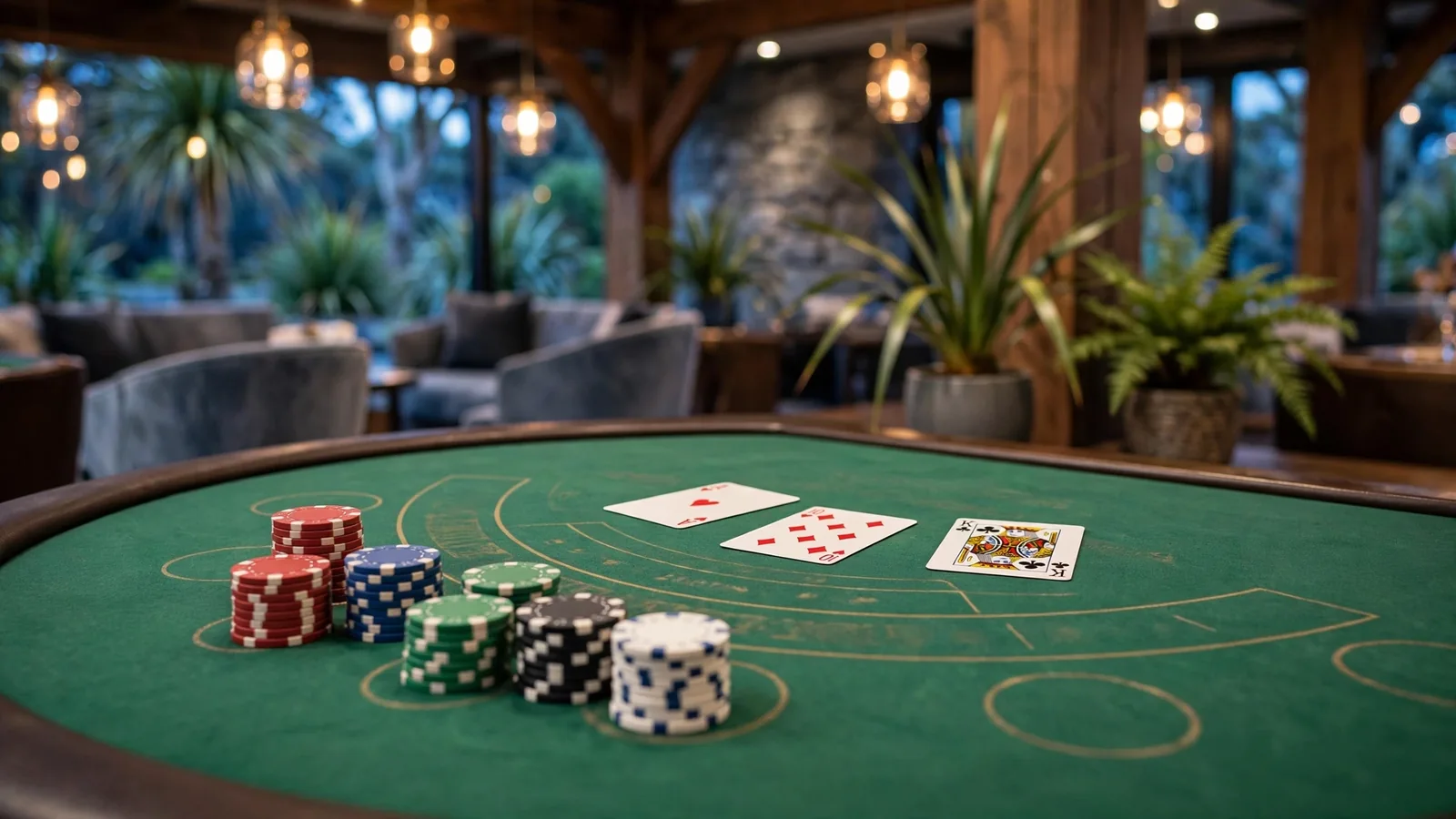
Roulette for New Zealanders: Bets, Odds and Variants
 Available in US
See how table and called bets differ, why wheel type matters to the odds, and what changes across roulette variants.

Table of Contents
- How Roulette Bets Work—and Where Called Bets Fit
- Choosing an Online Roulette Casino in New Zealand
- Why Roulette Odds Depend on the Wheel
- What Betting Systems Can—and Cannot—Change
- Roulette Apps on iPhone and Android: What to Check
- French Roulette’s Edge on Even-Money Bets
- Tips for Playing Roulette Without Treating Spins as Signals
- Is There a Best Roulette Number?
- Roulette Variants: What Changes Between Games
- What Happens to an Even-Money Bet When Zero Lands?
How Roulette Bets Work—and Where Called Bets Fit
A roulette bet begins with a choice: are you backing a number or group of numbers shown on the table, or making a called bet based on the numbers’ positions around the wheel? The two methods use different layouts. Once you know which one you are looking at, the names on a betting menu become easier to interpret.
Bets on the table layout
The betting layout is the numbered grid beside the wheel. Its marked spaces let you place a chip on a single number or across a boundary between spaces to cover a group. These are bets defined by where your chip sits on the table, not by where the numbers sit on the wheel.
A straight-up bet is placed on one number. A split covers two adjacent numbers on the layout; a street covers a row of three. A corner bet covers four numbers meeting at one point, while a line bet covers a larger group arranged across neighbouring rows. The exact placement matters: a chip centred on a boundary can mean something different from one placed inside a numbered space. If the layout is unfamiliar, ask the dealer or check the game’s rules before confirming the bet.
Choosing roulette online in New Zealand means finding an option that suits your preferences and provides clear information to consider. This list offers a concise starting point for your 2026 search.
Payout speed: 1-3 business days Wintino lists payouts as taking 1–3 business days, a useful detail to consider when choosing where to play.
License: Curaçao Gaming Authority, licence no. OGL/2024/165/0185 BitStarz lists a Curaçao Gaming Authority licence, number OGL/2024/165/0185. You can use this licence information as part of your assessment.
License: 07017519840 · Payout speed: 1-3 business days Zotabet lists licence number 07017519840 and a payout speed of 1–3 business days. These are the stated details to weigh when considering it.
License: Tobique Gaming Commission, licence no. 0000091 7Bit Casino lists a Tobique Gaming Commission licence, number 0000091. You can take this licensing detail into account when evaluating the option.
License: Tobique Gaming Commission, licence no. 0000002 Ricky Casino lists a Tobique Gaming Commission licence, number 0000002. This gives you a specific licensing detail to consider.
License: Malta Gaming Authority, licence no. MGA/B2C/370/2017 Play Grand lists a Malta Gaming Authority licence, number MGA/B2C/370/2017. You can factor this information into your choice.
License: Tobique Gaming Commission, licence no. 0000064 Neospin lists a Tobique Gaming Commission licence, number 0000064. This is the available detail to consider when reviewing it.
License: Malta Gaming Authority, licence no. MGA/B2C/394/2017 N1 Casino lists a Malta Gaming Authority licence, number MGA/B2C/394/2017. You can use this information as one factor in your decision.
Payout speed: 1-3 business days Lamabet lists payouts as taking 1–3 business days. This gives you a stated payout timeframe to consider.
Other table bets cover broad categories rather than a small cluster of numbered spaces. Outside bets include red or black, odd or even, and low or high numbers. Dozens and columns group numbers according to the grid. These labels describe the selection on the table; they do not refer to sections of the wheel.
The main practical distinction is how much of the layout a bet covers. A single-number bet selects one outcome, while a broader bet selects a group. That can change how often a bet wins and what it pays, but the label alone does not make it a better choice. Before placing chips, make sure you can identify both the covered numbers and the game’s stated payout.
Called bets follow the wheel
Called bets, also known as announced bets, use a different map. They group numbers according to their positions around the wheel, rather than their positions on the table. A called bet therefore refers to a wheel neighbourhood or sequence, even though the dealer records the wager on the table layout.
This difference can be easy to miss on a screen. A game may present a named wheel-sector option in a menu, while the chips representing that selection appear across several numbered spaces on the betting grid. The name describes the wheel-based grouping; the chip placement shows how the wager is entered. In live play, a called bet is announced to the dealer, who places the chips in the corresponding area.

Called bets are not simply another name for a straight-up bet or a dozen. A straight-up selection identifies one number on the layout. A dozen groups numbers by their table arrangement. A called bet groups numbers because of where they sit beside one another on the wheel. The selected numbers may look scattered when you trace them across the table, but form a continuous or defined area when you follow the wheel.
That is why reading only the table can be misleading. Two selections can involve comparable numbers of outcomes yet cover entirely different parts of the wheel, or one may be a broad table category while the other is a wheel-based cluster. The useful question is not just “where are the chips?” but “what rule defines the numbers covered?”
Choosing a bet without guessing at an advantage
People often look for the best roulette bets or the best way to play, but those phrases can mean different things. You might mean a bet that covers more outcomes, one that pays more when it wins, or one that is easier to understand. Those are not interchangeable aims. A larger possible payout does not mean a greater chance of winning, and covering more numbers does not by itself make a bet advantageous.
Attention: A larger possible payout does not mean a greater chance of winning, and covering more numbers does not by itself make a bet advantageous.
The same caution applies to choosing a single number. A called bet can make a wheel section easier to describe, but it does not turn that section into a prediction. Nor does selecting a familiar number create a special property for the wager. The bet type tells you what you have selected; it does not promise a result.
Online, take a moment to check the bet slip before the spin starts. Confirm whether the game has registered a table-layout selection or a named wheel grouping, and read the listed coverage and payout. If a menu uses unfamiliar terminology, open its help panel rather than relying on the visual position of the chips. In a physical game, the equivalent is asking the dealer to clarify the selection before it is accepted.
A bonus does not change these definitions. If you are considering an offer alongside roulette, read its conditions separately from the game’s betting instructions; promotional terms are not a guide to which bet is preferable. Keep the distinction straightforward: table bets are formed by positions on the betting grid, while called bets are formed by positions around the wheel. Once you know which map a selection uses, you can judge what it covers before deciding whether to place it.
Choosing an Online Roulette Casino in New Zealand
A roulette site’s appearance says little about who is responsible for its operation or what happens if a payment or bonus dispute arises. In New Zealand, it is especially important to distinguish the licensing framework being established from the system that will be fully operational later. Do not assume that a site offering roulette to New Zealanders already holds a domestic online casino licence.

The Online Casino Gambling Act 2026 came into force on 1 May 2026 and created New Zealand’s first domestic licensing framework for online casino gambling. The Department of Internal Affairs oversees that framework and is the country’s primary gambling regulator. The Gambling Commission has a different role: it hears and determines casino licensing applications, issues online casino licences and approves changes to licence conditions. Knowing which body does what helps you assess claims about licensing without treating a regulator’s name as a general endorsement of a website.
Understand the transition
The new regime is not yet fully operational; it is expected to reach that point in 2027. During the transition, which runs from 1 May 2026 to 1 December 2026, providers that were already serving people in New Zealand before the Act took effect may continue operating, subject to the Act’s transitional provisions. That permission is not the same as holding a licence under the complete new regime.
New Zealand law does not allow online casinos to be based domestically. Before the 2026 Act, offshore online casino gambling was not licensed or supervised by a New Zealand regulator, so customers had no domestic government recourse if something went wrong. The new framework changes the legal structure, but its transition matters when you assess a site’s claims. In particular, do not take wording such as “regulated” or “licensed” at face value without checking what it refers to and whether it describes a current domestic licence or a different arrangement.
Licensing Risks
Do not take wording such as “regulated” or “licensed” at face value without checking whether it refers to a current domestic New Zealand licence or a different arrangement.
Online casino gambling is not risk-free simply because a provider makes a licensing claim. Read the site’s terms and identify the legal entity responsible for the service, how it handles complaints and what process applies to account or payment disputes. If those details are difficult to find, that is a reason to pause rather than infer protections that may not apply.
Read the bonus terms before opting in
A roulette promotion can affect whether you can withdraw money, so assess its conditions before accepting it. New Zealand operators may set rules about who is eligible, which games count, when a bonus expires, how much wagering is required and what withdrawal restrictions apply. These are material terms, not small print that can safely be left until a cash-out request.
Bonus money must be wagered 50X within 30 days. Winnings from free spins must be wagered 50X within 7 days. A withdrawal request voids all active or pending bonuses. Check which balance is subject to the wagering requirement, whether roulette contributes towards it, and what happens to any bonus funds or associated winnings if you request a withdrawal. If the terms do not make those points clear, you cannot reliably judge the promotion’s value.
Eligibility rules may also determine whether you can claim an offer at all. Read the full conditions rather than relying on a headline that describes a bonus as available to everyone. Expiry and game-contribution rules can make a promotion harder to use than its initial description suggests; the withdrawal clause can make accepting it incompatible with cashing out while it remains active.

Make the comparison about accountability
When comparing online roulette services, separate the game itself from the conditions attached to the account. Review the operator’s licensing statements against New Zealand’s transition, then read the bonus, wagering and withdrawal terms in full. Do not treat a familiar app, polished interface or generous-sounding offer as evidence of domestic oversight.
A sound assessment also means being realistic about the limits of what a licence claim tells you. The Gambling Commission’s role in applications and licence conditions is distinct from the Department of Internal Affairs’ oversight of the framework. Neither a regulator’s name on a page nor a promotion’s headline settles whether the terms are suitable for you. The useful details are the provider’s legal status, the applicable conditions and the route available if a dispute arises.
Why Roulette Odds Depend on the Wheel
Roulette’s underlying odds are shaped by the pockets on its wheel. A ball has more possible destinations on some wheels than others, and the extra pocket matters even when the betting layout looks familiar. Comparing European and American Roulette shows why the wheel is a more useful guide to the game’s built-in probability than the table’s appearance.
European Roulette has 37 pockets: one zero and 36 numbered pockets. American Roulette has 38: a single zero, a double zero and 36 numbered pockets. The additional pocket on the American wheel changes the probability attached to a winning outcome. It does not need to change the table layout or the name of a bet to affect its expected return.
Features 37 pockets (one zero) with a house edge of 2.70% and a payout percentage of 97.30%.
Features 38 pockets (single and double zero) with a house edge of 5.26% and a payout percentage of 94.70%.
The house edge expresses that difference as the casino’s theoretical advantage over time. European Roulette has a house edge of 2.70%; American Roulette’s is 5.26%. These figures describe the game’s structure, not the result of an individual spin. A player can win on either wheel, but the extra zero gives the American game a larger built-in disadvantage for the player across repeated play.
Payout percentage describes the same relationship from the player’s side: it is the theoretical share of stakes returned over time. A specialist review gives European Roulette a payout percentage of 97.30% and American Roulette 94.70%. Those figures should be read as that review’s stated percentages, not as a promise about what a particular session will return. Individual outcomes vary, and a payout percentage is not a prediction of the next spin.
The two measures complement each other. A higher house edge corresponds to a lower theoretical payout percentage; a lower edge corresponds to a higher one. In practical terms, the European wheel’s single zero leaves less of an advantage to the house than the American wheel’s two zero pockets. That is the central reason European Roulette offers the better built-in odds between these two versions.
When people ask what the best odds are when playing roulette, the wheel is a sensible starting point. Among these two games, European Roulette has the lower house edge and the higher payout percentage. That comparison does not mean every bet on a European table has identical chances or returns. The precise odds of a wager depend on what it covers and how it pays, while the wheel determines the zero-related disadvantage built into the game.

The distinction also helps make sense of payout figures. A quoted percentage is not a guarantee that a player will get that share back, nor does it show what will happen over a short run of spins. It is a theoretical measure for the game, useful for comparing its structure. The pocket count explains where the difference comes from; the percentages summarise its effect.
So, if you are comparing the built-in odds of European and American Roulette, the European wheel is the less costly option in theoretical terms. Its single zero means fewer pockets than the American wheel, and the stated house-edge and payout figures reflect that difference. The comparison is about probability over time, not a method for forecasting outcomes or ensuring a return from a particular session.
What Betting Systems Can—and Cannot—Change
A roulette betting system is a rule for deciding how much to stake or when to stop. It can organise your play, but it cannot make a number, colour or other result more likely to appear. The wheel does not respond to your staking plan, and changing your stake does not remove the house edge.
That distinction matters when looking for a “best” system. A routine may suit the way you want to manage a session, but there is no staking pattern that turns roulette into a reliable source of winnings. If a system claims otherwise, it is making a prediction about outcomes that the betting rules cannot support.
A roulette betting system can organise your play, but it cannot make a number, colour or other result more likely to appear, nor can it remove the house edge.
Staking rules are not prediction methods
Some systems keep stakes the same from one spin to the next. Others increase or decrease them in response to wins and losses. These approaches change the pattern of money you put at risk, not the probability of the next result.
A run of one colour, for instance, does not make the other colour due. Each spin is a new event: earlier results do not alter the chances on the next one. A system that treats recent results as a signal is not reading the wheel; it is assigning meaning to a sequence that offers no dependable forecast.
This also means that a staking routine cannot guarantee a profit or prevent losses. Even a plan that produces a short winning run can be followed by losses, and no sequence of stake changes controls what the wheel will do. The longer the session continues, the more opportunities there are for the plan to encounter an unfavourable run—but the plan itself does not change the underlying odds.
Why Martingale is not a winning method
The Martingale system is often described as a way to recover losses: after each losing bet, the player raises the next stake, commonly by doubling it, then returns to the starting stake after a win. The appeal is easy to understand. One successful bet may appear to recoup earlier losses.
The weakness is just as straightforward. A win is not guaranteed to arrive before the required stake becomes unaffordable or exceeds the table’s limit. If losses continue, the amount needed for the next bet grows quickly. If a win does arrive, it does not prove that the system predicted anything; it simply ends that particular sequence.

Martingale changes how much you may lose before a win, and how much you stand to gain when one arrives. It does not make a losing sequence less possible, nor does it erase the house edge. Calling it a winning strategy confuses a method for varying stakes with a method for knowing the next result.
Other systems have the same basic limitation, whether they raise stakes after wins, lower them after losses, or follow a fixed progression. They can provide structure, but they cannot alter roulette’s probabilities. Treat any claimed “best” system as a preference about managing bets, not as an advantage over the game.
Roulette Apps on iPhone and Android: What to Check
A roulette app should be judged by how clearly it works on your device, not by claims that it can improve a spin’s result. If you are comparing options for an iPhone, iPad or Android phone, first check that the app is compatible with your device and operating system. Read the app’s description and permissions before installing it; access to features unrelated to play deserves a closer look.
Also check where the app comes from. An app-store listing can help you identify its publisher and review its update history, but it does not by itself establish that the gambling service behind the app is suitable for you. If an operator directs you to download software outside an app store, consider the security implications before proceeding. Avoid entering payment details until you understand who operates the service and how its account and support functions work.
App Security Check
- Check app compatibility with your device and operating system
- Review app description and required permissions
- Identify the publisher and update history
- Verify the operator’s identity and support functions
- Locate tools for setting limits or taking a break
Free play and real-money play
A free roulette app can be useful for learning how its controls work or passing time without placing a real-money bet. But “free” may mean different things: some apps offer play without cash stakes, while others include links or prompts to move into real-money gambling. Check what the app actually does before creating an account or sharing personal information.
Free-play results are not a way to forecast real-money outcomes. Nor does choosing an iPhone app over an Android app change the odds of a roulette game. The device affects the interface and performance; it does not make a particular number or bet more likely to win.
Before using an app for real-money play, look for clear information about deposits, withdrawals, account security and customer support. Check whether you can set limits or take a break, and make sure the controls are easy to find rather than buried in menus. If the app freezes, disconnects or leaves a bet’s status unclear, stop and resolve the account issue before placing another bet.
Read bonus terms before accepting
An offer inside an app is not necessarily unrestricted money. New Zealand operators may attach eligibility rules, wagering requirements, expiry dates, game-contribution rules and withdrawal restrictions to bonuses. Read the terms before opting in, including how roulette contributes toward wagering and what happens if you request a withdrawal.

Bonus money must be wagered 50X within 30 days. Winnings from free spins must be wagered 50X within 7 days. A withdrawal request voids all active or pending bonuses. Those conditions can materially affect whether an offer is useful, so do not treat a headline bonus as cash you can withdraw.
No single app is best for every iPhone or Android user. Compare compatibility, clarity, security and the terms attached to any offer, then decide whether the experience suits your needs. If you choose to play for money, do not risk more than you can afford to lose.
French Roulette’s Edge on Even-Money Bets
French Roulette can be a better choice for even-money bets when its La Partage or En Prison rule is in force. These rules change what happens to an eligible bet when zero lands; they do not make a particular result more likely. Their benefit is limited to even-money outside bets, rather than every bet on the table.
On a single-zero wheel without either rule, the house edge is 2.70%. When La Partage or En Prison applies, the edge on eligible even-money bets falls to 1.35%. That improvement comes from the treatment of the stake after zero, not from a different wheel or a clever way of placing bets.
With La Partage, zero means half of an eligible stake is returned and the other half is lost. En Prison instead holds the bet for the next spin. If it wins then, the original stake comes back without extra winnings; if it loses, the stake is collected. The two rules handle the stake differently, but both soften the effect of zero on these bets.
- Check the specific rules displayed for the table
- Verify if La Partage or En Prison actually applies
- Understand that the advantage only applies to even-money outside bets
- Rely on the “French Roulette” label alone
- Assume the rule applies to every bet on the table
- Mistake the rule for a way to forecast the next result
The limits matter. Neither rule improves the odds on bets that are not even-money outside bets. Nor does either turn roulette into a game where you can forecast the next result. French Roulette’s advantage is a feature of its rules, not a signal that a number, colour or side is due.
So if you are comparing tables for an even-money bet, check the rules displayed for that table rather than relying on the game’s name alone. A French Roulette label does not, by itself, tell you how a particular table handles zero. The relevant question is whether La Partage or En Prison actually applies to the bet you intend to place.
This is a narrower advantage than the phrase “best roulette” can suggest. French Roulette can offer the best odds for eligible even-money bets under these rules; it does not mean every wager on it has the same reduced edge. The rule also does not alter the payout on an ordinary winning even-money bet. It changes the downside in the specific case covered by the rule.
That distinction helps separate a table rule from what people sometimes call the best roulette strategy. Choosing a table with La Partage or En Prison changes the terms of an eligible bet. Changing how much you stake, or how you spread bets across the layout, does not create that same rule-based reduction. There is no best spread that makes all outcomes favourable: the relevant comparison is whether the table offers one of these rules and whether your bet qualifies.

If a casino also offers a bonus, read its terms separately from the roulette rules. Bonus money must be wagered 50X within 30 days; winnings from free spins must be wagered 50 times within 7 days. A withdrawal request voids all active or pending bonuses. Those conditions can affect access to bonus funds, but they do not change the odds of a roulette bet.
Tips for Playing Roulette Without Treating Spins as Signals
Useful roulette tips are less about finding a pattern than deciding in advance how you will respond to a game that cannot be predicted. Each spin is independent: previous results do not alter the probability of what happens on the next spin. A run of one colour, a number that has not appeared recently, or a sequence that looks unusual is not a signal.
That matters when you are tempted to change your decisions after a loss. Waiting for a result to “turn around”, or increasing a stake to recover money, does not make a future win more likely. The same is true after a winning run: earlier results do not make another win due. A real-money bet can lose, regardless of how convincing a pattern may seem.
Before you play, decide what amount you can afford to lose without affecting bills, savings or other commitments. Treat that as the cost of entertainment, not as money you expect to get back. Stop when you reach the limit; do not add funds because the session has gone badly or because you feel close to a win. If losing the amount would cause difficulty, do not stake it.
Session Management
Decide on an amount you can afford to lose without affecting bills or savings.
Establish a specific point to end the session before you start playing.
Pause if you find yourself playing longer than intended or trying to win back losses.
It can also help to set a stopping point for the session before opening the game. Roulette can make repeated decisions feel routine, so pause if you find yourself playing longer than intended, staking more than planned, or trying to win back losses. Stepping away is a practical choice, not a failed strategy.
Take time to understand the bet slip and the rules of the table before confirming a wager. Check what you have selected and the stake shown; do not rely on a hurried tap or assume that a familiar-looking game follows the same rules as another. If anything is unclear, leave the bet unplaced until you understand it.
There is no universally best play that makes roulette safe or turns random outcomes into a reliable source of income. You can choose how to participate, but you cannot control the result of a spin. Keeping stakes within an affordable limit and being willing to stop are more useful safeguards than looking for meaning in a sequence of results.
Is There a Best Roulette Number?
No number has a lasting advantage in roulette. A number that appeared on an earlier spin is not more likely to appear again, and one that has been absent does not become “due”. Each spin is independent: its result does not change the probability of any number on the next spin.
That can be difficult to trust when you have watched a run of results. A number appearing repeatedly may look unusually strong; a long gap may make another seem ready to return. But those patterns describe what has already happened, not what the next spin will produce. The wheel does not keep a record that adjusts its next result.
This also means there is no objectively best number in roulette to select based on recent outcomes. Choosing a number because it appeared several times, or avoiding one because it appeared on the previous spin, does not give you an edge. Past results can be noted, but they cannot predict the next one.
You can still choose a number for personal reasons: it may be meaningful to you, or you may simply prefer it. That makes the choice yours, not more likely to win. Calling a number “lucky” can be a harmless way to describe a preference, provided it is not mistaken for evidence about future results.
A display of previous spins may help you see what has occurred at a table. It cannot tell you what will occur next. Treating a short sequence as a signal turns coincidence into a prediction, without changing the underlying chance of an outcome.
So, if you are comparing the best numbers in roulette, the honest answer is that no past result identifies them. Pick a number if you enjoy having a personal choice, but do not stake money on the belief that the sequence has made it more likely. Every real-money bet can lose, including one placed on a number that has just appeared or one that has not appeared for a while.
No Best Number
No past result or “lucky” number identifies a lasting advantage, as every spin is an independent event.
Roulette Variants: What Changes Between Games
A roulette game’s name does not tell you everything that changes. Check the wheel layout and the rules attached to the table: those determine the house edge, not the colour scheme or presentation.
European Roulette has 37 pockets: one zero and 36 numbered pockets. Its house edge is 2.70%. American Roulette has 38 pockets, with both a single zero and a double zero, and a higher house edge of 5.26%. That extra pocket changes the underlying odds, even though many of the betting options look familiar.
French Roulette uses the same single-zero layout as European Roulette. Its rules may include La Partage or En Prison for eligible even-money outside bets when zero lands. When either rule applies, the house edge for those bets is 1.35%. The rule matters as much as the wheel: a French label alone is not enough to confirm which conditions apply, so read the table rules.
Mini Roulette is a more substantial departure from the standard wheel layouts. It has 13 pockets and a house edge of 7.89%; with La Partage, that edge falls to 3.85%. A smaller wheel does not automatically mean better odds.
So which game is best for you? If you are comparing the stated house edges, French Roulette with the relevant rule offers the lowest figure for eligible even-money bets. That is not a blanket advantage for every bet, and it does not make a spin predictable. A strategy for choosing stakes cannot change the wheel’s probabilities; the practical comparison is between the rules and layouts available at the table.
Names such as Lightning Roulette do not, by themselves, establish a wheel layout or house edge. Check the game’s displayed rules rather than assuming that a branded title works like a standard European or American table. Whatever variant you choose, roulette outcomes are random, and every real-money bet can lose. Do not risk more than you can afford to lose.

What Happens to an Even-Money Bet When Zero Lands?
A zero can interrupt the usual result of an even-money outside bet. These bets normally pay an amount equal to the stake when they win. La Partage and En Prison change what happens if zero appears, but only for even-money outside bets and only on that spin. They do not apply to every kind of roulette wager.
La Partage: part of the stake comes back
With La Partage, a zero result returns half your stake. The other half is collected, so you lose only that portion rather than the whole bet.
For instance, if you place an eligible even-money bet and zero lands, the bet does not win, but half the amount you staked is returned. The rule settles the bet at that point; it does not carry the remaining half into another spin.
En Prison: the bet waits
En Prison handles the same situation differently. When zero lands, your even-money bet is held for the next spin instead of being settled immediately.
If that following spin wins for your original selection, your stake is returned, but you receive no extra winnings. If it loses, the stake is collected. The next result therefore determines whether the held stake comes back or is lost.
The difference is practical: La Partage returns part of the stake straight away, while En Prison leaves the whole stake unresolved until the next spin. Neither rule turns zero into a winning result, and both are limited to the specified outside bets.
If you are looking for the best roulette tactics or a reliable way to win, these rules are not a winning system. They describe how a table handles one particular outcome; they do not let you control the spin. Check the table’s stated rules before placing a bet, because the treatment of zero matters only when the relevant rule is in force. Any real-money bet can still lose.
Published by the Casino Expert NZ team.